


Solid Surface Stone Vs. Granite: Pros And Cons


When it comes to choosing materials for countertops, vanities, or other surfaces in homes and commercial spaces, solid surface stone and granite are two popular options. Each has its unique set of advantages and disadvantages, making the decision dependent on specific needs, preferences, and usage scenarios. Here’s a detailed comparison to help you make an informed choice.
Durability
Granite, a natural igneous rock, is renowned for its exceptional hardness and resistance to scratches. It can withstand daily wear and tear, including accidental knocks from utensils or heavy objects. However, it is porous by nature, which means it is susceptible to staining if not properly sealed. Over time, even with sealing, acidic substances like lemon juice or vinegar can etch the surface if left unaddressed.
Solid surface stone, a man-made material typically composed of acrylic or polyester resins mixed with mineral fillers, offers good durability but is less hard than granite. It is more prone to scratches and can be damaged by excessive force or sharp objects. On the bright side, it is non-porous, making it highly resistant to stains and bacterial growth, as liquids and contaminants cannot penetrate the surface.
Appearance
Granite’s biggest appeal lies in its natural beauty. Each slab has a unique pattern of veins, flecks, and colors, ranging from subtle neutrals to bold hues, giving it an organic and luxurious look. This uniqueness, however, means that matching slabs for large surfaces can be challenging, and there may be slight variations in color and pattern even within the same batch.
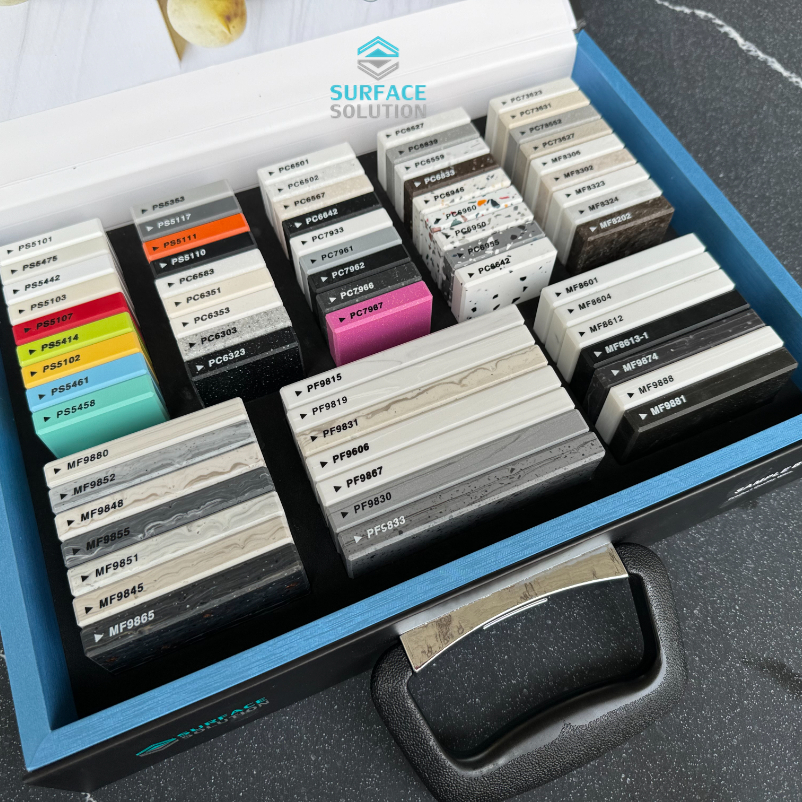
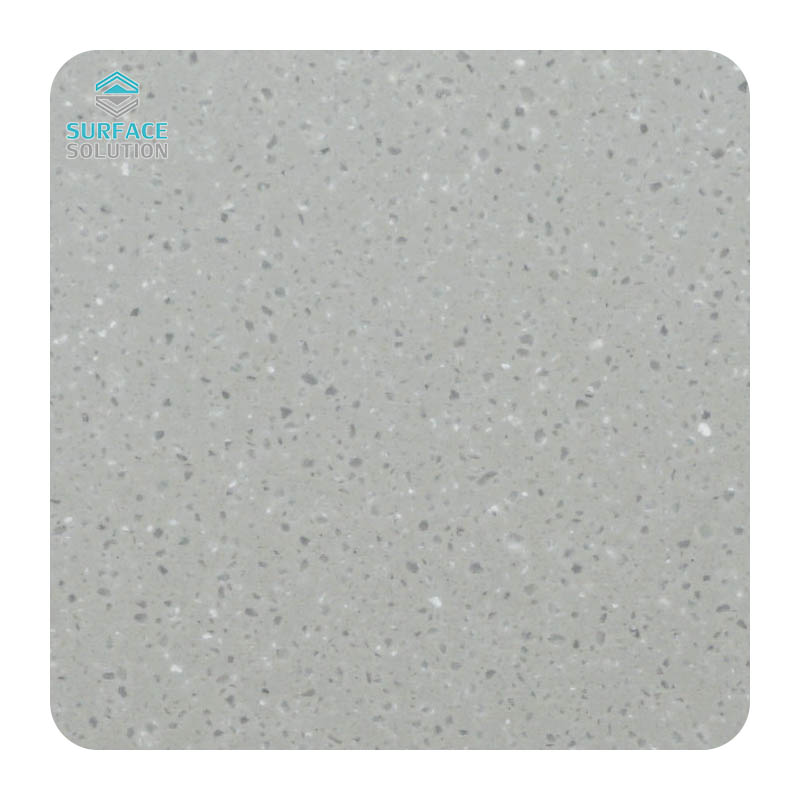
Solid surface stone provides a more uniform appearance. It is available in a wide range of solid colors and simulated patterns that mimic natural stones like marble or granite. One of its key aesthetic advantages is the ability to create seamless joints, which gives surfaces a sleek, modern look. This makes it ideal for large countertops or custom-shaped designs where a cohesive appearance is desired.

Maintenance
Maintaining granite requires regular sealing, usually every 6 to 12 months, to prevent staining. Daily cleaning can be done with mild soap and water, but harsh chemicals or abrasive cleaners should be avoided as they can damage the sealant or the stone itself. Spills, especially acidic ones, need to be wiped up promptly to prevent etching.
Solid surface stone is much easier to maintain. Its non-porous nature eliminates the need for sealing. Daily cleaning with warm water and a mild detergent is sufficient. Most stains can be easily removed with gentle scrubbing, and minor scratches can often be buffed out using a non-abrasive cleaner or polish, restoring the surface’s smoothness.
Cost
Granite is generally more expensive than solid surface stone, primarily due to the costs associated with mining, cutting, and transporting the natural stone. The price can vary significantly based on the rarity of the granite type, with exotic varieties commanding premium prices. Installation costs are also higher because of the stone’s weight and the need for precise cutting.
Solid surface stone is more budget-friendly. Its man-made composition allows for more consistent production and lower manufacturing costs. Installation is often less expensive too, as the material is lighter and easier to cut and shape, reducing labor costs.

Environmental Impact
Granite is a natural resource, and its extraction involves mining, which can have negative environmental impacts such as deforestation, soil erosion, and habitat destruction. Additionally, transporting heavy granite slabs over long distances contributes to carbon emissions.
Solid surface stone is often made from a combination of natural minerals and synthetic resins. While the production of resins involves fossil fuels, some manufacturers offer eco-friendly options with recycled materials. Its lighter weight also reduces transportation-related emissions compared to granite.
Suitability for Different Spaces
Granite is an excellent choice for high-traffic areas like kitchen countertops, where its scratch resistance is an asset. However, its porosity makes it less ideal for bathrooms or areas prone to constant moisture unless sealed regularly.
Solid surface stone’s non-porous and moisture-resistant properties make it perfect for bathrooms, vanities, and even laboratory surfaces. Its seamless design also prevents water from seeping into joints, reducing the risk of mold or mildew growth. While it can be used in kitchens, it requires more care to avoid scratches from sharp objects or damage from excessive heat.
Conclusion
The choice between solid surface stone and granite depends on your priorities. If you value natural beauty, extreme hardness, and don’t mind regular maintenance, granite is a great option. On the other hand, if you prefer easy maintenance, a uniform appearance, seamless design, and a more budget-friendly solution, solid surface stone is likely the better fit. Consider your lifestyle, the intended use of the surface, and long-term maintenance commitments to make the best decision for your space.
Catalogue
Related Blogs
-
 Artificial Stone in Hotel Interiors: Luxury and DurabilityIn high-end hotel design, materials must balance timeless elegance with daily heavy use—and artificial stone has become the top choice for modern luxury interiors. Unlike natural stone, premium acrylic and modified solid surface delivers cons
 -
 Top White Reception Desk Styles for a Clean, Sleek LookThe reception area acts as the first impression of any brand. Among countless furniture options, white reception desks stand out as a timeless choice to craft a neat, contemporary atmosphere. Bright, reflective white surfaces amplify natural lig
 -
 Artificial Stone Wall Art: Adding Texture and Depth to Modern InteriorsIn the pursuit of unique, expressive interior spaces, artificial stone wall art has become a powerful design element. Unlike flat paint, wallpaper, or ordinary wall panels, artificial stone wall art brings authentic texture, thre
 -
 Artificial Stone for Retail Spaces: Enhancing Customer ExperienceIn the fiercely competitive retail industry, store design is no longer merely a matter of interior decoration. It has evolved into a core strategic tool to attract foot traffic, extend customer stay time, and elevate brand perception.


