


Pairing Wall Colors with Your Solid Surface Stone Countertops: A Guide to Harmonious Design


Pairing Wall Colors with Your Solid Surface Stone Countertops: A Guide to Harmonious Design
Foundational Principles for Pairing Wall Colors with Stone Countertops
Before diving into specific pairings, it’s essential to grasp a few core principles that apply to any solid surface stone. First, identify undertones: Even neutral countertops have subtle undertones (warm, cool, or neutral) that will influence how wall colors interact with them. For example, a gray quartz with beige undertones leans warm, while one with blue-gray undertones leans cool. Second, balance pattern intensity: Bold, veiny countertops (e.g., marble-look quartz) pair best with muted wall colors to avoid visual clutter, while solid or subtly patterned surfaces can handle softer pastels or deeper hues. Third, consider natural light: Spaces with abundant natural light can accommodate darker wall colors without feeling cramped, while dimmer rooms benefit from lighter shades to brighten the area and highlight the countertop’s details.

Pairing Tips by Solid Surface Stone Type
1. Engineered Quartz Countertops
White/Gray Quartz (Cool Undertones): For crisp, modern kitchens, pair cool-toned white or gray quartz with soft blue, sage green, or light gray walls. These colors complement the countertop’s coolness without clashing, creating a serene, contemporary vibe. Avoid warm yellows or oranges, as they can make cool quartz appear dull.
Beige/Taupe Quartz (Warm Undertones): Warm-toned quartz pairs beautifully with creamy white, soft beige, or muted terracotta walls. These hues enhance the countertop’s warmth, creating a cozy, inviting space. For a subtle contrast, opt for light gray walls with warm undertones—this adds depth without disrupting the harmonious feel.
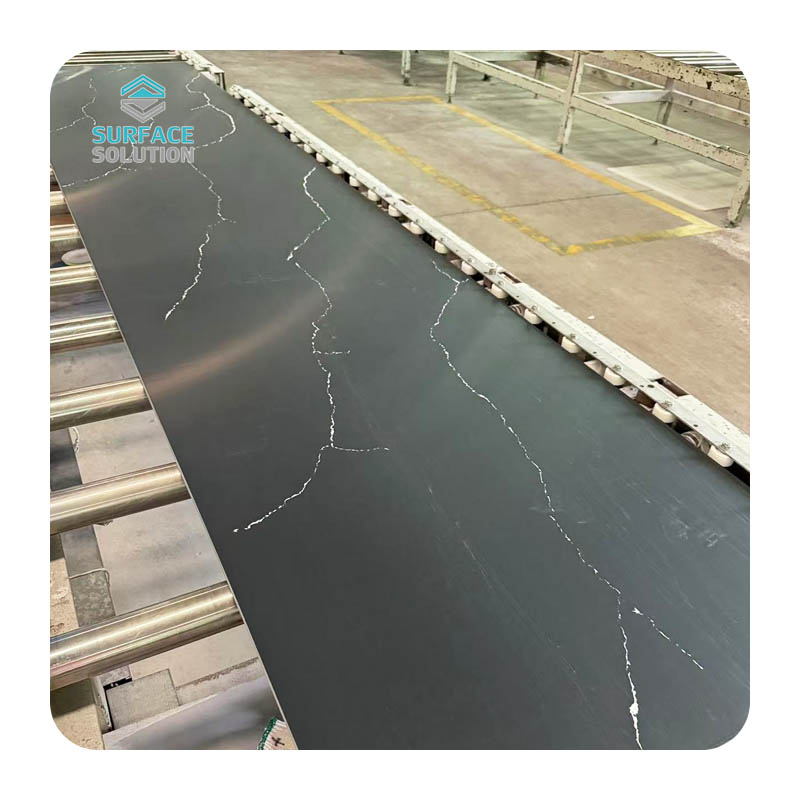
Veiny Quartz (Marble/Granite Look): Veiny quartz (e.g., white with gray veins, black with gold veins) is a statement piece, so keep walls simple. Solid white, off-white, or light gray walls let the countertop’s pattern take center stage. If you want a touch of color, choose a muted shade that echoes one of the vein colors (e.g., soft gray for gray veins, pale gold for gold veins).
2. Cultured Marble Countertops
Classic White/Cream Cultured Marble: Pair this timeless countertop with soft white, ivory, or pale beige walls for a cohesive, spa-like feel—ideal for bathrooms. For a touch of sophistication, add a light gray accent wall or trim to create subtle contrast.
Beige/Pink-Toned Cultured Marble: Warm-toned cultured marble thrives with walls in muted peach, soft coral, or light taupe. These colors amplify the countertop’s warmth, creating a welcoming space. Avoid cool blues or grays, as they can clash with the marble’s pink or beige undertones.
3. Porcelain Slab Countertops
Concrete-Look Porcelain (Gray/Charcoal): Industrial or modern spaces benefit from pairing concrete-look porcelain with soft white, light gray, or even black walls. For a bold contrast, opt for deep navy blue walls—this adds drama while complementing the slab’s neutral tone. For a warmer twist, pair with taupe walls to soften the industrial edge.
Wood-Look Porcelain: Wood-look porcelain (in oak, walnut, or maple tones) pairs beautifully with earthy wall colors like sage green, warm beige, or soft terracotta. These hues enhance the natural wood aesthetic, creating a rustic or transitional space. Avoid bright, cool colors, as they can detract from the wood’s warmth.
4. Solid Surface Acrylic Countertops
Solid White/Neutral Acrylic: White acrylic countertops are a blank canvas—pair them with soft pastels (light blue, pale pink, mint green) for a cheerful, airy space, or with deep grays, navy, or forest green for a bold, modern contrast. This versatility makes them ideal for both kitchens and bathrooms.
Bold-Colored Acrylic (Navy, Emerald, Burgundy): Bold countertops require muted wall colors to avoid overwhelming the space. Pair navy acrylic with soft gray or white walls, emerald green with cream or beige walls, and burgundy with light gray or off-white walls. This lets the countertop be the focal point while keeping the space balanced.

Style-Specific Pairing Recommendations
Modern/Contemporary Spaces
Traditional/Classic Spaces
Coastal Spaces
Final Tips for a Polished Look
Test Paint Samples: Always test wall paint samples against your countertop in natural and artificial light. Colors can shift dramatically depending on lighting, so this step ensures you’re happy with the pairing.
Consider Cabinetry: Wall colors should also complement your cabinetry, as the trio (walls, countertops, cabinets) creates the space’s overall palette. For example, white cabinets pair with most countertop and wall color combinations, while wooden cabinets lean toward warm wall tones.
Use Accents to Tie It All Together: Add accessories (rugs, towels, artwork) that echo both the countertop’s undertones and the wall color to create a cohesive look. For example, if you have gray quartz with blue undertones and light blue walls, add navy blue towels or artwork to tie the colors together.
Final Thoughts
Related Blogs
-
 White acrylic solid surface remains a top-selling option for distributors, wholesalers and project contractors, widely specified for kitchen countertops, bathroom vanities, hotel vanity tops, commercial reception counters and custom tabletops. A common question from your downstream buyers is straigh
 -
 When renovating kitchens, bathrooms or commercial spaces, homeowners and designers often weigh different countertop materials. Acrylic solid surface is one of the most popular options, but a common question remains: is it durable enough for everyday use?Acrylic solid surface countertops are manufact
 -
 Acrylic solid surface is a premium engineered composite material widely used for kitchen countertops, vanity tops, wall panels, custom furniture and commercial interior projects. Many people confuse it with pure acrylic sheet or natural marble, but it is a carefully formulated blend of mineral powde
 -
 Kitchens and bathrooms are the most frequently used and easily worn spaces in residential and commercial buildings, where countertops face constant spills, moisture, friction, and daily stains. Compared with traditional materials such as natural marble, granite, quartz stone, and laminate, acrylic s


