Sustainable Innovations in Acrylic Solid Surface Manufacturing
The global construction and interior design industries are undergoing a profound green transformation, driven by stringent environmental regulations, rising carbon neutrality goals, and growing market demand for eco-friendly building materials. As a high-performance material widely adopted in healthcare, commercial, residential, and public infrastructure projects,
acrylic solid surfaces have long been celebrated for their superior hygiene, durability, and design flexibility. However, traditional acrylic manufacturing processes have historically faced challenges including high energy consumption, volatile organic compound (VOC) emissions, and non-recyclable production waste. To align with global sustainable development agendas, the
acrylic solid surface manufacturing sector has embraced technological breakthroughs and process optimizations. This article explores the cutting-edge sustainable innovations reshaping acrylic solid surface production, covering green raw material reform, low-carbon manufacturing technologies, circular economy practices, and eco-friendly application advancements.
1. Green Raw Material Optimization and Low-Emission Formulation Innovation
The foundation of sustainable
acrylic solid surface manufacturing lies in raw material upgrading and formula optimization, which eliminates environmental hazards from the source. Traditional acrylic production relies heavily on pure methyl methacrylate (MMA) monomers and chemical additives that may release harmful substances during processing and service. Modern sustainable manufacturing has revolutionized raw material selection by adopting low-VOC, non-toxic, and environmentally compliant formulations. Leading manufacturers have developed food-grade pure acrylic raw material systems and zero-formaldehyde, zero-benzene additive technologies, completely eradicating harmful chemical emissions throughout the product lifecycle.
In addition to purified virgin materials, recycled acrylic resin has become a core sustainable raw material innovation. Advanced sorting and depolymerization technologies enable the recovery and reprocessing of post-consumer and post-industrial acrylic waste into high-purity recycled MMA monomers. These recycled raw materials retain the physical and mechanical properties of virgin resins while significantly reducing reliance on fossil fuel-based feedstocks. Furthermore, optimized mineral filler formulations replace traditional high-carbon inorganic fillers with low-carbon natural mineral powders, reducing the overall carbon footprint of each product batch without compromising the material's non-porous, durable characteristics. Strict raw material screening ensures all finished products meet international indoor air quality standards and green building certification requirements, making them safe for high-sensitivity spaces such as hospitals, schools, and elderly care facilities.
2. Low-Carbon and Energy-Saving Manufacturing Process Upgrades
Conventional
acrylic solid surface production features energy-intensive polymerization, curing, and forming processes, resulting in high power consumption and thermal waste. Recent technological innovations have comprehensively optimized production workflows to achieve energy reduction, emission cutting, and efficiency improvement. Traditional constant-temperature heating curing has been replaced by advanced microwave high-temperature polymerization and multi-zone intelligent constant-temperature casting technologies. Microwave heating delivers uniform internal and external heating, shortening curing cycles by 30% to 40% while reducing overall energy consumption, and enhances product density and structural stability simultaneously.
Vacuum defoaming pretreatment technology represents another critical process innovation. By combining molecular sieve dehydration with dynamic vacuum defoaming, manufacturers eliminate internal bubble defects in thick acrylic panels without secondary heating, reducing product scrap rates and rework energy waste. Unlike traditional high-pressure thermal forming that generates substantial heat loss, modern low-temperature thermoforming and laser precision processing technologies further cut production energy consumption. Laser cutting and shaping are non-contact, mold-free processes that minimize material loss, reduce auxiliary energy consumption, and avoid industrial waste generated by traditional mechanical cutting. Moreover, intelligent automated production lines realize precise parameter adjustment and real-time energy monitoring, optimizing resource utilization and stabilizing low-carbon production standards for mass manufacturing.
3. Zero-Waste Production and Closed-Loop Circular Manufacturing
Circular economy transformation is the core breakthrough for sustainable
acrylic solid surface manufacturing, solving the industry’s long-standing waste disposal dilemma. Traditional production generates large quantities of edge scraps, defective products, and processing waste, most of which were previously sent to landfills due to technical barriers to recycling. Modern sustainable manufacturing systems build a full-process closed-loop recycling mechanism, covering production, processing, and post-consumer recycling.
On the production side, all production scraps, unqualified semi-finished products, and processing residues are centrally collected, crushed, and reintroduced into the raw material formulation after purification treatment. This in-plant waste recycling system achieves nearly 100% utilization of production waste, eliminating production-side solid waste emissions. For end-of-life products discarded after long-term service, professional depolymerization and regeneration technologies break down used acrylic solid surfaces into reusable resin monomers and mineral fillers, which can be remanufactured into new high-performance acrylic products without quality degradation.
Complementing material recycling, manufacturers have launched product life extension strategies based on the material’s inherent repairability. Minor surface scratches, stains, and wear can be repaired and polished on-site, avoiding frequent product replacement and reducing resource waste. This combination of recyclable production and repairable application forms a complete circular industrial chain, fundamentally improving the sustainability of acrylic solid surface products.
4. Eco-Friendly Adhesion and Finishing Technology Innovation
The installation and post-processing links of acrylic solid surfaces were once overlooked sources of environmental pollution, mainly caused by high-VOC adhesives and chemical finishing agents. Sustainable manufacturing innovations have achieved full green coverage of auxiliary materials and processes. Traditional solvent-based adhesives have been replaced by water-based, zero-VOC green adhesives and bionic environmentally friendly bonding technologies. Inspired by natural biological adhesion principles, these new adhesive materials feature stable bonding performance, no harmful substance release, and excellent compatibility with acrylic substrates, ensuring seamless joint effects while meeting strict environmental standards.
In terms of surface finishing and protection, manufacturers have abandoned traditional chemical coating processes that produce volatile pollutants. New physical polishing and nano-green surface treatment technologies form a durable, stain-resistant protective layer on the acrylic surface without chemical spraying. This treatment enhances the material’s scratch resistance, anti-yellowing performance, and easy-cleaning capability, extending product service life and reducing secondary pollution caused by post-maintenance chemical agent use. Additionally, solvent-free casting processes have been widely popularized in industrial production, completely eliminating solvent volatilization pollution during molding and upgrading the overall green level of production.
5. Sustainable Performance Advantages and Industrial Value
The series of sustainable manufacturing innovations have endowed modern acrylic solid surfaces with unique green competitive advantages, driving the upgrading of the entire building materials industry. Compared with traditional building materials such as natural stone, ceramic tile, and laminate, innovated acrylic solid surfaces feature lower carbon emissions in production, zero pollution in service, and recyclability at end-of-life. Their low thermal expansion coefficient ensures excellent dimensional stability under temperature changes, reducing maintenance replacement frequency and long-term resource consumption.
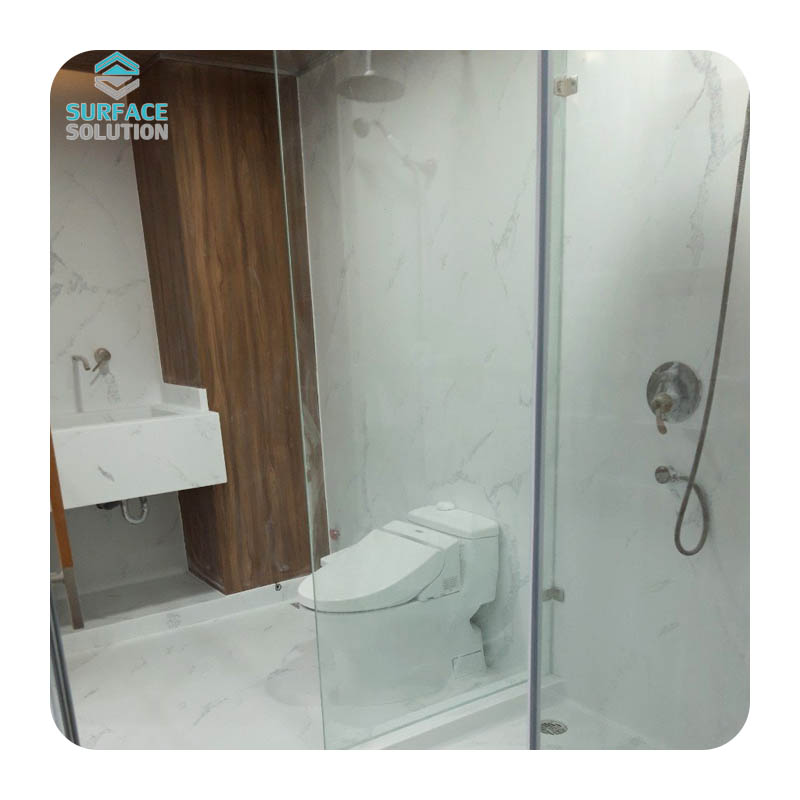
In application scenarios, green acrylic solid surfaces perfectly adapt to low-carbon construction requirements of green buildings, passive houses, and sustainable medical facilities. Their non-toxic, low-emission, and antibacterial properties create healthy indoor environments, while diverse customizable designs reduce material redundancy in interior decoration. For manufacturers, sustainable technological innovations not only reduce energy consumption, waste disposal, and raw material costs but also help enterprises meet international environmental certification standards, expand high-end green market share, and comply with increasingly strict global carbon tariff and environmental protection policies.
6. Future Trends of Sustainable Acrylic Manufacturing
As global carbon neutrality initiatives advance, sustainable acrylic solid surface manufacturing will continue to evolve toward intelligent low-carbon production, full biobased raw material replacement, and digital circular management. Future technological research will focus on biobased MMA monomers extracted from renewable biomass resources, further reducing the industry’s dependence on fossil fuels and achieving near-zero carbon production. Intelligent digital manufacturing systems will realize real-time carbon footprint tracking of each product, precise energy scheduling, and intelligent waste recycling, standardizing low-carbon production processes.
In addition, cross-industry technological integration will drive further performance and environmental upgrades. The combination of new energy-powered production equipment, intelligent temperature control systems, and green processing technologies will continue to reduce industrial carbon emissions. Meanwhile, the establishment of a unified industry recycling standard and regional waste recycling network will improve the resource utilization efficiency of waste acrylic products, forming a mature, large-scale sustainable industrial ecosystem.
Conclusion
Sustainable innovations in acrylic solid surface manufacturing have completely transformed the traditional high-energy, high-pollution production model, realizing comprehensive upgrades in raw material formulation, production technology, waste utilization, and auxiliary processes. Through green formula optimization, low-carbon intelligent manufacturing, closed-loop circular economy, and eco-friendly post-processing technologies, modern acrylic solid surface products achieve the integration of high performance, low carbon emission, and environmental safety. As a versatile and sustainable green building material, innovated acrylic solid surfaces will play an increasingly important role in green construction, healthcare environment optimization, and low-carbon urban development. With continuous technological iteration and industrial standard improvement, the acrylic solid surface manufacturing industry will further advance toward high-efficiency, zero-waste, and carbon-neutral development, contributing to the sustainable transformation of the global construction industry.


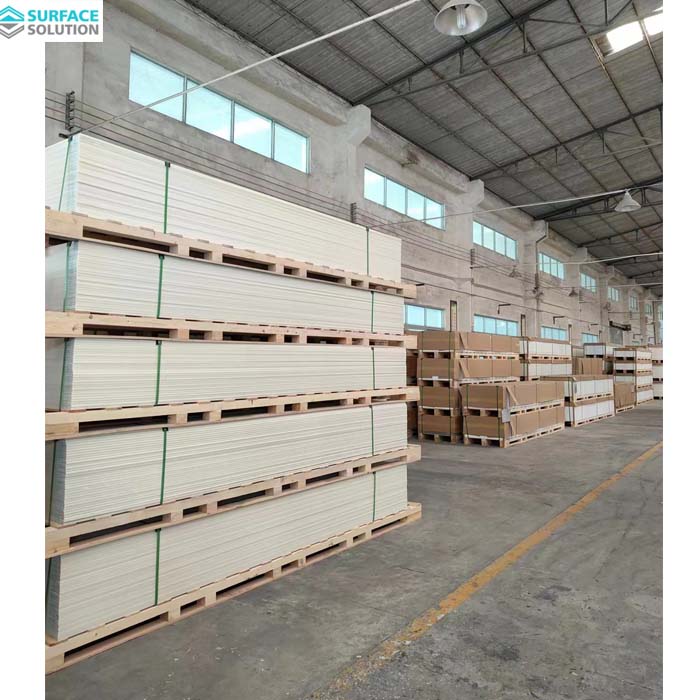 White acrylic solid surface remains a top-selling option for distributors, wholesalers and project contractors, widely specified for kitchen countertops, bathroom vanities, hotel vanity tops, commercial reception counters and custom tabletops. A common question from your downstream buyers is straigh
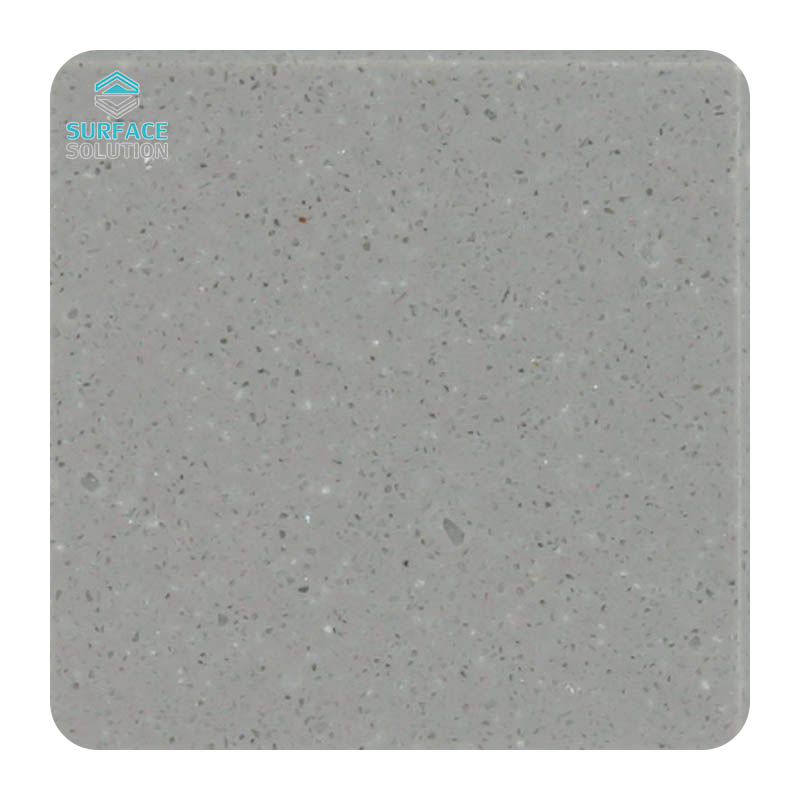 When renovating kitchens, bathrooms or commercial spaces, homeowners and designers often weigh different countertop materials. Acrylic solid surface is one of the most popular options, but a common question remains: is it durable enough for everyday use?Acrylic solid surface countertops are manufact
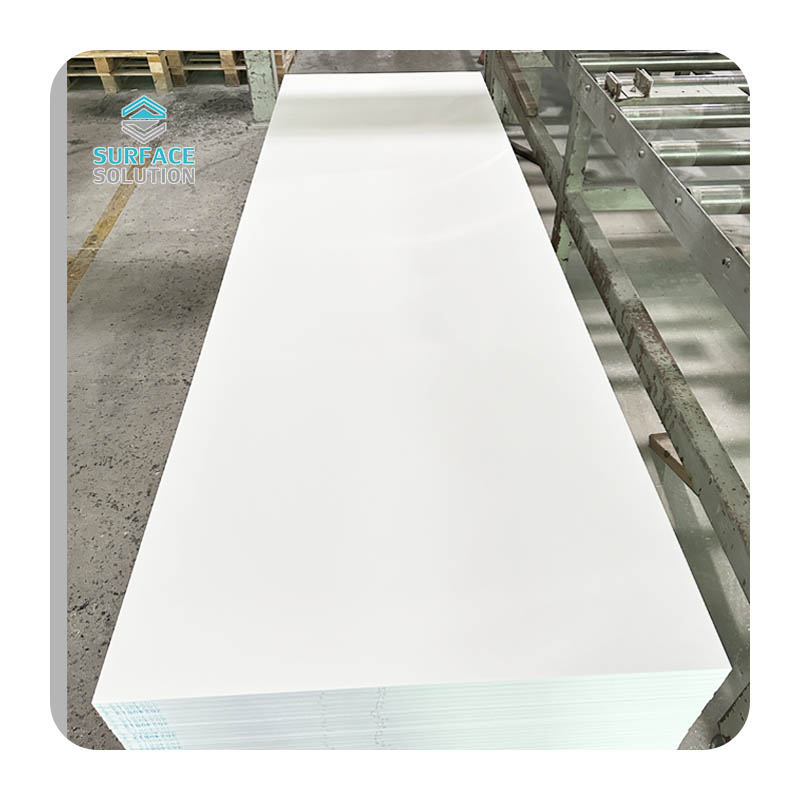 Acrylic solid surface is a premium engineered composite material widely used for kitchen countertops, vanity tops, wall panels, custom furniture and commercial interior projects. Many people confuse it with pure acrylic sheet or natural marble, but it is a carefully formulated blend of mineral powde
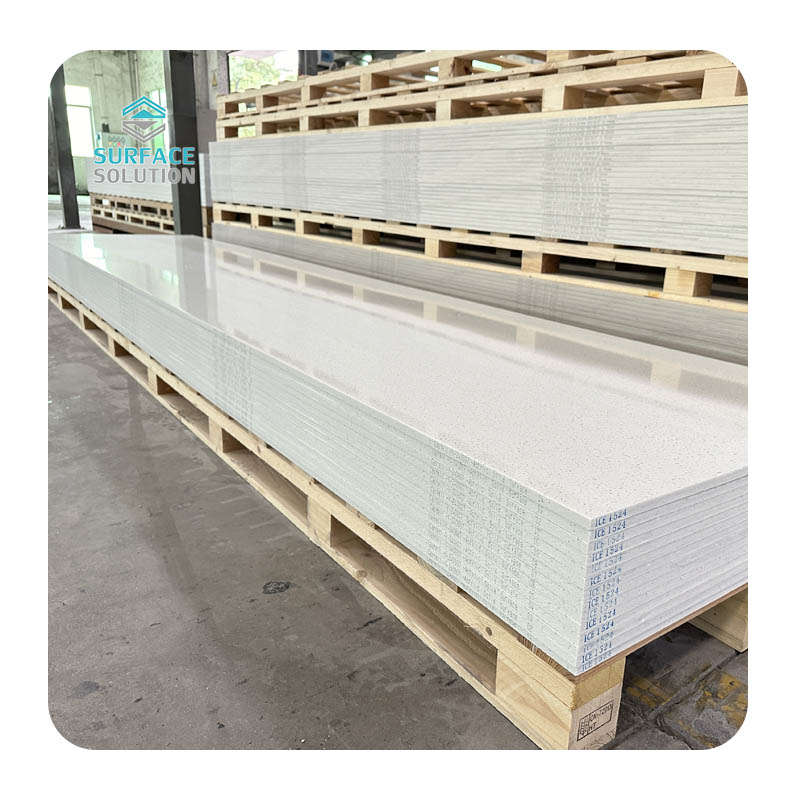 Kitchens and bathrooms are the most frequently used and easily worn spaces in residential and commercial buildings, where countertops face constant spills, moisture, friction, and daily stains. Compared with traditional materials such as natural marble, granite, quartz stone, and laminate, acrylic s