


Solid Surface Counter Maintenance: Do's and Don'ts


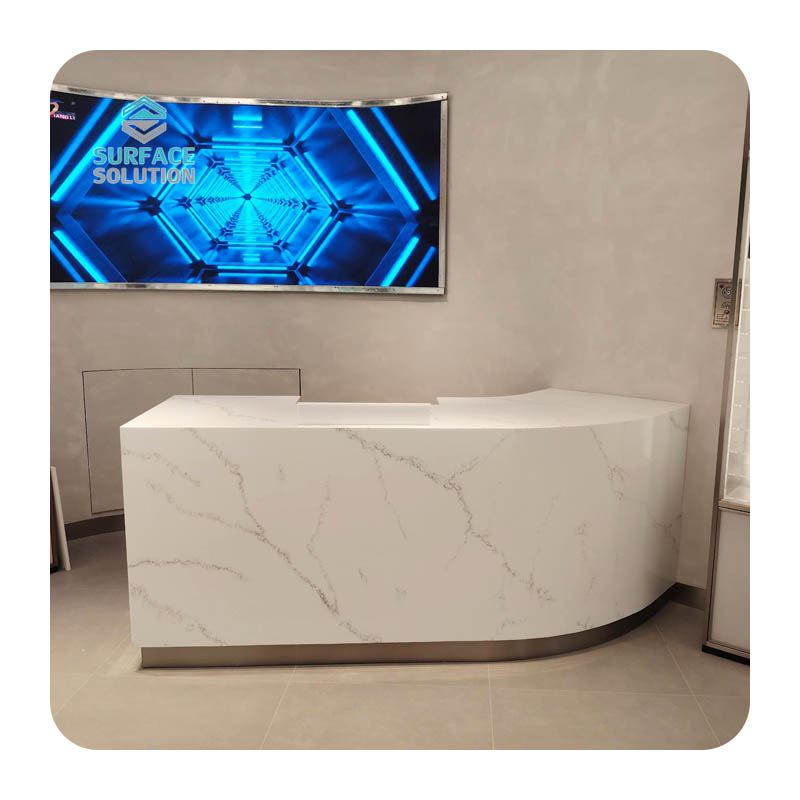
Non-porous nature: Resists liquid penetration but is not impervious to chemical or physical damage.
Repairability: Minor scratches, scuffs, or stains can be restored with basic tools—unlike natural stone, which often requires professional intervention.
By aligning your habits with these traits, you can keep your counters looking pristine for decades.

Use warm water + mild dish soap, white vinegar (diluted 1:1 with water), or specialized solid surface cleaners (e.g., DuPont™ StoneTech® Daily Cleaner).
Wipe with a soft microfiber cloth, sponge, or non-scratch pad (avoid steel wool or scouring pads).
For sticky residues (e.g., gum, food adhesives), let the cleaner sit for 1–2 minutes before wiping to loosen debris without scrubbing.
Always use heat-resistant trivets, pot holders, or silicone mats for hot pans, Dutch ovens, or electric cooktops.
Avoid placing boiling liquids directly on the surface—even brief contact with 212°F (100°C) water won’t damage it, but repeated exposure to higher heat (e.g., a 400°F baking sheet) can degrade the resin.
Blot spills (coffee, wine, citrus, oil) with a clean cloth immediately—don’t rub, which can spread the stain.
For stubborn stains (e.g., turmeric, ink, or food dyes), apply a paste of baking soda + water, let it sit for 10–15 minutes, then wipe clean.
For oil-based stains (e.g., grease, lotion), use a small amount of isopropyl alcohol (70%) on a cloth to break down the residue before rinsing.
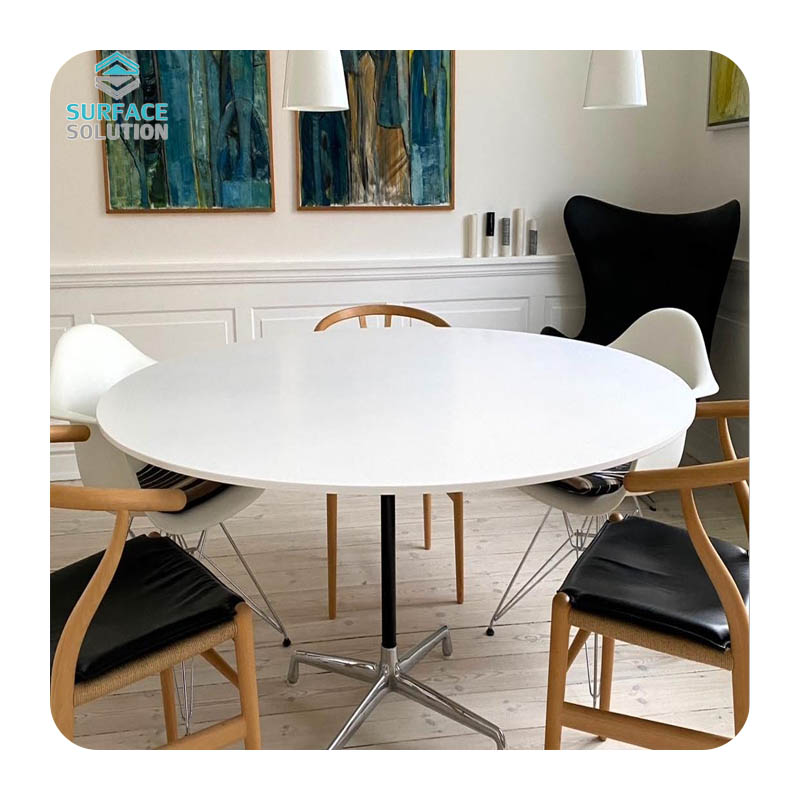
Always use wooden or plastic cutting boards for chopping, slicing, or dicing.
Avoid dragging sharp objects (knives, scissors, metal utensils) across the surface, as they can leave fine scratches that dull the finish over time.
For matte or satin finishes: Use a non-abrasive polish (e.g., Countertop Magic®) and buff with a dry microfiber cloth.
For high-gloss finishes: Apply a small amount of carnauba wax (safe for solid surface) and buff in circular motions to enhance shine.
Commercial spaces (e.g., restaurants, hotels) should polish monthly; residential kitchens/bathrooms can do this quarterly.
Scratches: Use wet/dry sandpaper (400-grit for light scratches, 220-grit for deeper ones) to sand the area in circular motions, then progress to 600-grit to smooth, and polish to match the finish.
Chips: Fill small chips (≤1/4 inch) with solid surface repair kits (available from manufacturers like Corian®)—clean the area, mix the resin filler, apply, and sand/polish once cured.
Stain buildup: For aged stains, use a mild abrasive cleaner (e.g., Bon Ami®) sparingly, paired with a soft pad, then rinse thoroughly.
Avoid: Scouring powders (Comet®, Ajax®), steel wool, abrasive sponges, bleach, ammonia, drain cleaners, oven cleaners, or acetone-based products (nail polish remover).
Why? Abrasives create micro-scratches that trap dirt and dull the finish; chemicals like bleach can fade colors or corrode the resin’s protective layer.
Avoid: Placing hot pans (straight from the stove/oven), curling irons, or space heaters directly on the counter.
Consequence: Delamination (separation of resin and mineral layers), bubbling, or yellowing—especially in lighter colors.
Avoid: Dropping pots, pans, glassware, or tools (e.g., hammers) on the counter.
Avoid standing or sitting on the counter—even thick slabs can crack under uneven weight.
Don’t let food, water, or cleaners sit in seams for extended periods.
Don’t use sharp tools to scrape debris from seams (this can damage the adhesive bond).
Avoid: Installing solid surface counters in unshaded outdoor areas (e.g., open patios) without UV protection.
For indoor counters near large windows, use window films or curtains to reduce direct sunlight exposure.
Avoid: Cutting metal, sanding materials, or using the counter as a base for power tools (drills, saws).
These activities create deep scratches, gouges, or resin damage that may require professional repair.
Residential kitchens/bathrooms: Clean daily, polish quarterly, and address scratches as soon as they’re noticed.
Commercial spaces (restaurants, hotels): Clean after each use, polish monthly, and train staff on heat/scratch prevention.
Healthcare facilities: Use hospital-grade, pH-neutral cleaners (approved for solid surface) to maintain hygiene without damaging the surface.
Related Blogs
-
 White acrylic solid surface remains a top-selling option for distributors, wholesalers and project contractors, widely specified for kitchen countertops, bathroom vanities, hotel vanity tops, commercial reception counters and custom tabletops. A common question from your downstream buyers is straigh
 -
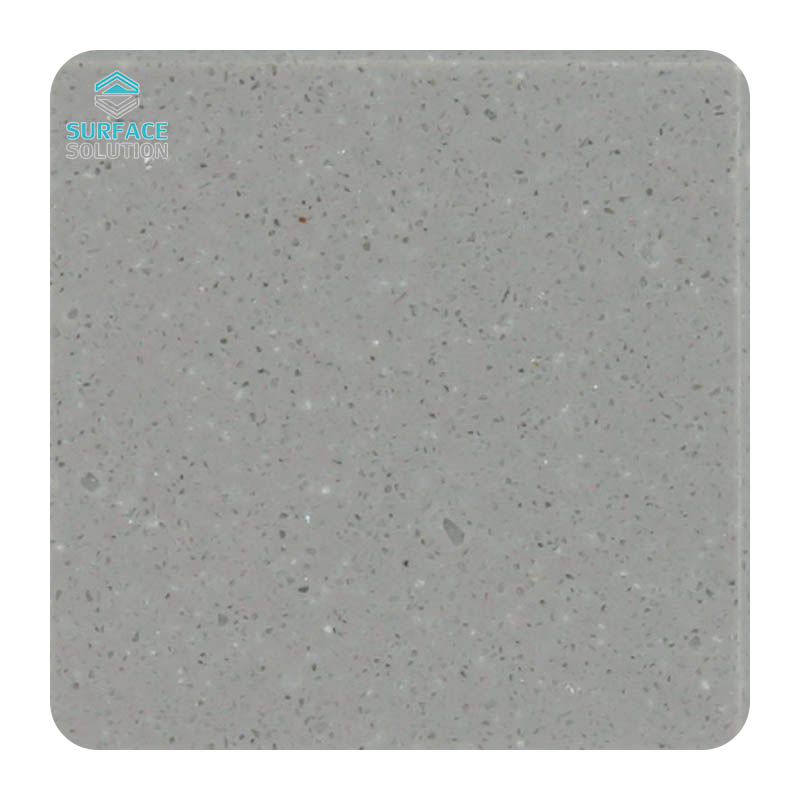 When renovating kitchens, bathrooms or commercial spaces, homeowners and designers often weigh different countertop materials. Acrylic solid surface is one of the most popular options, but a common question remains: is it durable enough for everyday use?Acrylic solid surface countertops are manufact
 -
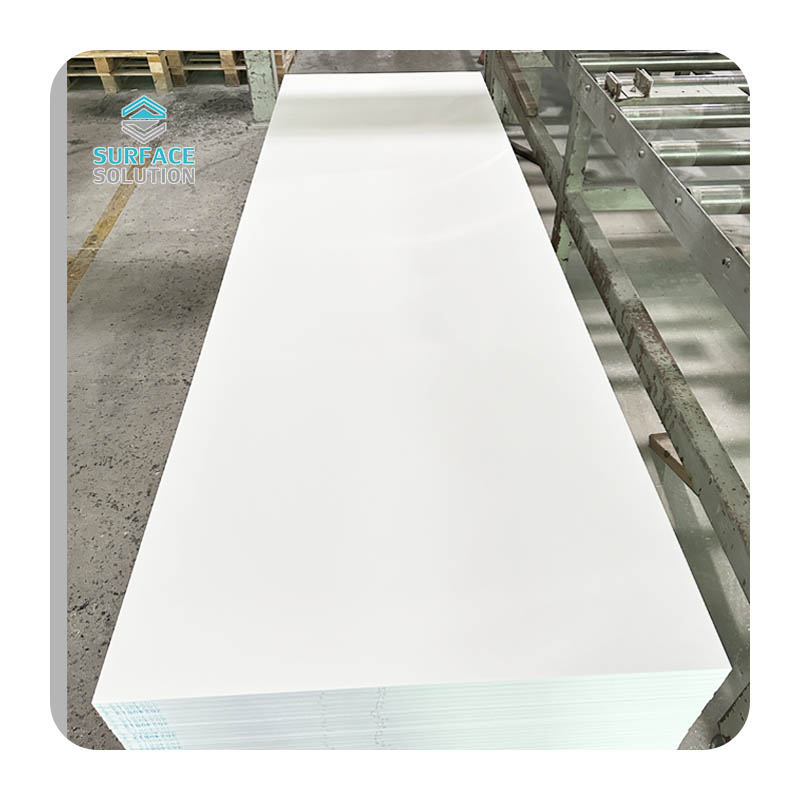 Acrylic solid surface is a premium engineered composite material widely used for kitchen countertops, vanity tops, wall panels, custom furniture and commercial interior projects. Many people confuse it with pure acrylic sheet or natural marble, but it is a carefully formulated blend of mineral powde
 -
 Kitchens and bathrooms are the most frequently used and easily worn spaces in residential and commercial buildings, where countertops face constant spills, moisture, friction, and daily stains. Compared with traditional materials such as natural marble, granite, quartz stone, and laminate, acrylic s


