Lighting Ideas to Complement Your Solid Surface Counter
Solid surface counters are celebrated for their smooth, seamless finish, color versatility, and ability to elevate any space—from kitchens to bathrooms, home offices to wet bars. Yet, even the most stunning solid surface can fall flat without the right lighting. The goal of complementary lighting is twofold: to highlight the counter's unique texture and color, and to provide functional illumination for daily tasks like food prep, grooming, or working. Whether your solid surface is a crisp white, warm beige, deep gray, or a bold hue, the right lighting scheme can enhance its beauty and boost the overall ambiance of the room. Below are curated lighting ideas tailored to solid surface counters, along with tips to ensure harmony between light and surface.
1. Task Lighting: The Foundation of Functionality
Task lighting is non-negotiable for spaces where solid surface counters are used for practical purposes—think kitchen countertops, bathroom vanities, or home office desks. It should be bright, focused, and positioned to eliminate shadows, while also complementing the counter's finish.
For
kitchens: Under-cabinet lighting is the gold standard for
solid surface kitchen counters. LED strip lights or puck lights installed beneath upper cabinets cast a direct, even glow across the countertop, ideal for chopping vegetables, reading recipes, or washing dishes. Opt for warm white (2700K-3000K) LEDs for creamy or warm-toned solid surfaces (e.g., almond, sand) to enhance their coziness; cool white (4000K) works better for white, gray, or bold-colored counters, as it accentuates their crispness. Avoid fluorescent under-cabinet lights—they can cast a harsh, unflattering hue on solid surfaces and create glare on their smooth finish.
For
bathrooms: Vanity lighting should be positioned to avoid shadows on the face, which is crucial for grooming tasks. Wall-mounted sconces on either side of the mirror (60-72 inches above the floor) provide even illumination across the
solid surface counter. Choose fixtures with frosted glass shades to soften the light and prevent glare on the counter’s non-porous surface. For double vanities, install a sconce on each side of both mirrors or use a linear LED light bar above the mirror—just ensure it’s wide enough to cover the entire counter length. Warm white LEDs are preferred here, as they mimic natural light and make skin tones appear more natural.
For home offices: If your solid surface counter doubles as a desk, a adjustable desk lamp is essential. Look for a lamp with a dimmable LED bulb—this allows you to adjust the brightness based on your task (e.g., brighter for typing, softer for reading). A lamp with a metallic finish (brushed nickel, matte black) can complement the counter's color: matte black pairs well with light counters, while brushed nickel adds warmth to dark solid surfaces.
2. Ambient Lighting: Set the Overall Tone
Ambient lighting provides general illumination for the entire room, creating a base layer that supports task lighting and highlights the solid surface counter's place in the space. It should be soft and diffused to avoid overwhelming the counter's smooth texture.
Recessed ceiling lights (can lights) are a popular choice for ambient lighting in kitchens and bathrooms with solid surface counters. Install them in a grid pattern to ensure even coverage—space them 4-6 feet apart for optimal brightness. Use dimmable bulbs so you can adjust the ambiance: brighter for busy cooking sessions, dimmer for a relaxed evening vibe. For rooms with high ceilings, pendant lights can add ambient light while making a design statement. In kitchens, hang 2-3 pendant lights above an island with a solid surface counter—choose fixtures with fabric or glass shades to soften the light. For a cohesive look, match the pendant finish to other hardware (e.g., faucet, cabinet pulls) on the counter.
In smaller spaces (e.g., powder rooms with solid surface counters), a flush-mount ceiling light with a diffuser is ideal. It provides ample ambient light without taking up too much space, and the diffused light enhances the counter’s color without creating glare. For a touch of elegance, opt for a flush-mount light with a metallic frame that complements the counter's tone—brass for warm counters, chrome for cool tones.
3. Accent Lighting: Highlight the Counter's Beauty
Accent lighting is all about drawing attention to the solid surface counter's best features—whether it's its seamless edge, unique color, or integrated sink. It adds depth and visual interest to the space, turning the counter into a focal point.
LED strip lights installed along the bottom edge of a kitchen island (with a solid surface counter) create a floating effect, highlighting the island's silhouette and the counter's finish. This is especially striking for dark-colored solid surfaces, as the light contrasts with the counter and makes it stand out. In bathrooms, install LED strips behind the vanity mirror or along the base of the vanity cabinet—this casts a soft glow onto the solid surface counter, accentuating its smoothness.
For solid surface counters with integrated backsplashes, consider installing LED tape behind the backsplash (where it meets the wall). This creates a subtle glow that outlines the backsplash and counter, adding a touch of luxury to the space. Choose a color temperature that matches the counter: warm white for creamy backsplashes, cool white for white or gray ones.
If your solid surface counter has a unique feature (e.g., a decorative edge, a built-in soap dispenser, or a colored inlay), use a small, focused accent light (like a mini puck light) to highlight it. Position the light at a 45-degree angle to the feature to avoid glare and create a dramatic effect.
4. Natural Lighting: Maximize What You Have
Natural light is the best way to showcase the true color and texture of a solid surface counter. It enhances the counter's seamless finish and makes its color appear more vibrant. Maximize natural light by keeping windows unobstructed—avoid heavy curtains or blinds that block light.
In kitchens, if the solid surface counter is near a window, use a sheer curtain to diffuse the light—this prevents harsh sunlight from creating glare on the counter's surface. For bathrooms with windows above the vanity, install a frosted window film to maintain privacy while allowing natural light to filter through. Natural light also pairs well with artificial lighting: during the day, it supplements task and ambient light, while at night, artificial lights take over.
If your space lacks natural light, mimic it with full-spectrum LED bulbs. These bulbs replicate the wavelength of natural sunlight, making the solid surface counter's color look as it would in daylight. They're ideal for rooms like basements or interior bathrooms with solid surface counters.
5. Key Tips for Harmonizing Lighting with Solid Surface Counters
Match Color Temperature to Counter Color: Warm white (2700K-3000K) works best for warm-toned solid surfaces (beige, almond, light brown), as it enhances their warmth. Cool white (4000K) is better for cool-toned counters (white, gray, black) or bold colors (blue, green), as it makes them appear more vibrant. Avoid daylight (5000K+) unless the space has ample natural light—it can make warm counters look washed out.
Avoid Glare: Solid surface counters have a smooth, slightly reflective finish, so avoid harsh, direct lighting that causes glare. Use frosted glass shades, diffusers, or fabric shades to soften light. Position task lights at an angle (not directly above) the counter to minimize reflections.
Layer Lighting: The best lighting schemes combine task, ambient, and accent lighting. For example, in a kitchen with a solid surface island: under-cabinet lights (task), recessed ceiling lights (ambient), and pendant lights (accent) work together to highlight the counter and make the space functional and beautiful.
Choose Dimmable Lights: Dimmable bulbs allow you to adjust the light intensity based on the time of day and your needs. This is especially important for solid surface counters—brighter light for tasks, softer light for ambiance.
Coordinate Fixture Finishes: Match the finish of your lighting fixtures to other hardware on the solid surface counter (faucet, cabinet pulls, sink). For example, if you have a brushed nickel faucet, choose brushed nickel sconces or pendant lights. This creates a cohesive look that ties the entire space together.
Final Thoughts
Lighting is a powerful tool that can transform the way your solid surface counter looks and functions. By combining task, ambient, and accent lighting—tailored to the counter's color, the room's purpose, and your personal style—you can highlight the counter's unique beauty while creating a space that's both practical and inviting. Remember to prioritize LED bulbs for their energy efficiency, long lifespan, and ability to render colors accurately. Whether you're updating an existing space or designing a new one, take the time to plan your lighting scheme—it will make all the difference in how you enjoy your solid surface counter for years to come.


 White acrylic solid surface remains a top-selling option for distributors, wholesalers and project contractors, widely specified for kitchen countertops, bathroom vanities, hotel vanity tops, commercial reception counters and custom tabletops. A common question from your downstream buyers is straigh
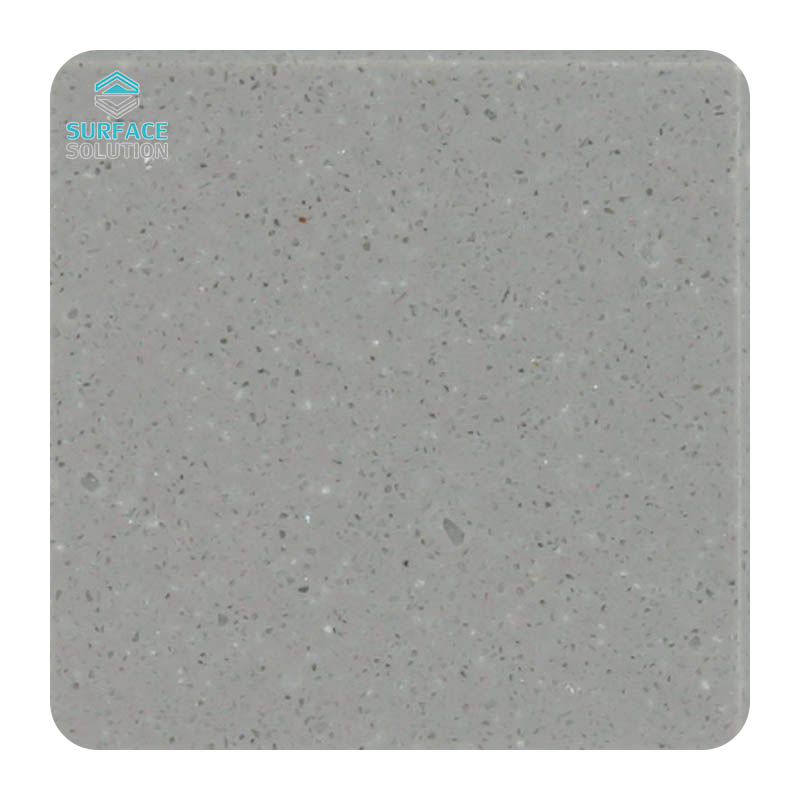 When renovating kitchens, bathrooms or commercial spaces, homeowners and designers often weigh different countertop materials. Acrylic solid surface is one of the most popular options, but a common question remains: is it durable enough for everyday use?Acrylic solid surface countertops are manufact
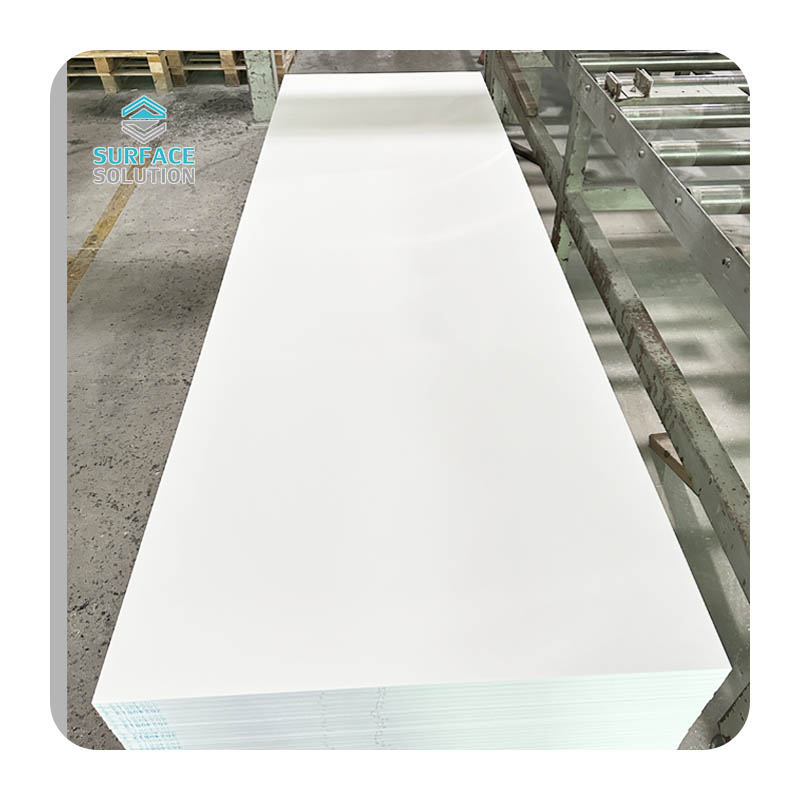 Acrylic solid surface is a premium engineered composite material widely used for kitchen countertops, vanity tops, wall panels, custom furniture and commercial interior projects. Many people confuse it with pure acrylic sheet or natural marble, but it is a carefully formulated blend of mineral powde
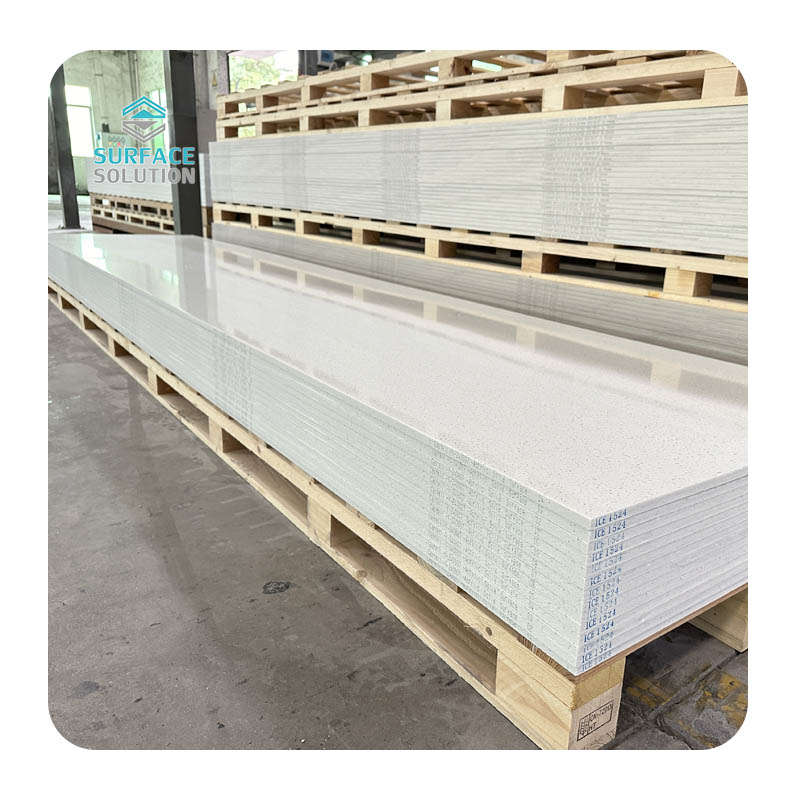 Kitchens and bathrooms are the most frequently used and easily worn spaces in residential and commercial buildings, where countertops face constant spills, moisture, friction, and daily stains. Compared with traditional materials such as natural marble, granite, quartz stone, and laminate, acrylic s


