Future Trends: What's Next for Solid Surface Counters in Interior Design


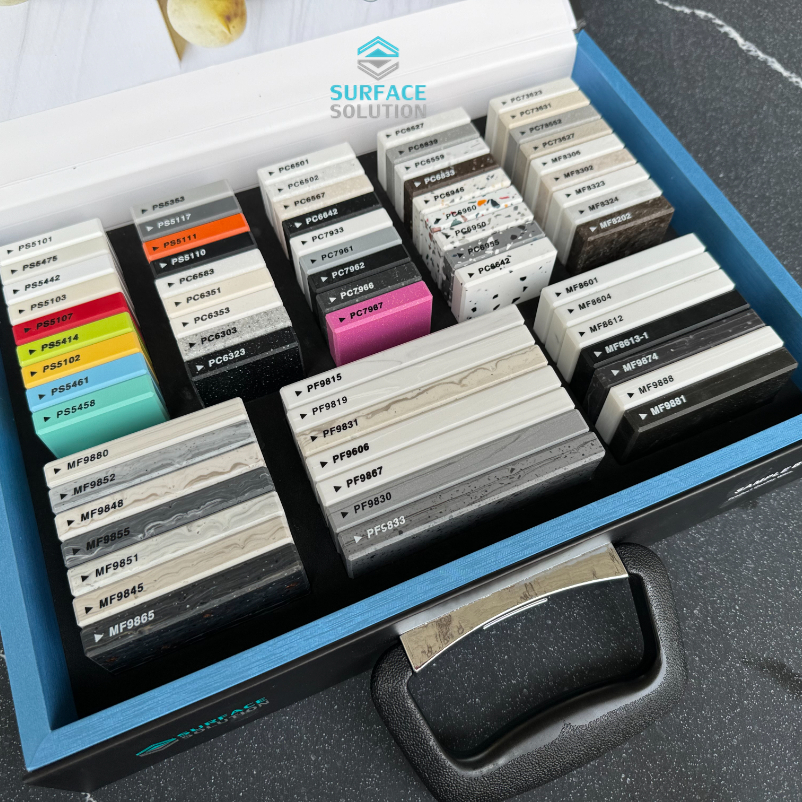
Solid surface counters have long secured their place in modern interior design as a reliable, versatile, and aesthetically flexible material. Valued for their seamless finish, outstanding durability, and easy maintenance, they have replaced many traditional stone and tile solutions in both residential and commercial spaces. As interior design evolves toward sustainability, intelligent functionality, and organic minimalism, solid surface countertops are undergoing continuous material innovation and design iteration. Looking ahead, five key trends will shape the next chapter of solid surface applications, redefining how designers and homeowners perceive and use this timeless material.
Environmental awareness is no longer an optional concept but a core standard for modern interior material selection. The future development of solid surface counters will focus heavily on green manufacturing and circular sustainability. Traditional acrylic solid surfaces are being upgraded with recycled mineral fillers, low-VOC resin formulas, and bio-based raw materials, effectively reducing carbon footprints while maintaining original physical performance. Leading manufacturers are launching GREENGUARD-certified eco-friendly lines that minimize harmful emissions and support healthy indoor environments. In addition, the material's repairable and renewable characteristics align perfectly with sustainable design philosophies. Unlike quartz or natural stone that require full replacement after damage, solid surface counters can be refinished and restored, extending their service life and reducing construction waste. In the next decade, eco-friendly solid surfaces with high recyclability and low environmental impact will become mainstream specifications for high-end residential and green commercial projects.
The boundary between decorative materials and intelligent home systems is gradually blurring, and smart integration has become a breakthrough trend for solid surface counters. Moving beyond single decorative and bearing functions, next-generation solid surfaces are evolving into interactive functional surfaces. Emerging innovations include built-in wireless charging modules, temperature-sensing surfaces, adaptive ambient lighting, and self-cleaning coatings with antibacterial properties. In kitchen and bathroom scenarios, IoT-enabled solid surface counters can monitor surface cleanliness, resist bacterial growth automatically, and even remind users of regular maintenance. For commercial spaces such as hospitals, hotels, and offices, enhanced antimicrobial and UV-resistant solid surface finishes will meet stricter hygiene standards. This fusion of material durability and smart technology transforms ordinary countertops into multi-functional intelligent carriers, catering to the growing demand for convenient, hygienic, and tech-driven living spaces.
Future interior design is abandoning rigid, angular layouts and embracing soft, flowing organic aesthetics. Thanks to excellent thermoformability, solid surface materials stand out from rigid quartz and natural stone, becoming the best choice for fluid spatial design. The trend of seamless curved modeling will continue to gain popularity, including rounded counter edges, integral curved kitchen islands, continuous curved wall-counter integration, and irregular custom-shaped workstations. Unlike spliced stone materials with obvious gaps, solid surfaces can achieve one-piece molding and invisible seamless connections, creating smooth, uninterrupted spatial lines. This soft design language weakens the cold sense of hard decoration, injects warmth and vitality into the space, and is widely applied in minimalist homes, high-end retail stores, boutique hotels, and modern office interiors.
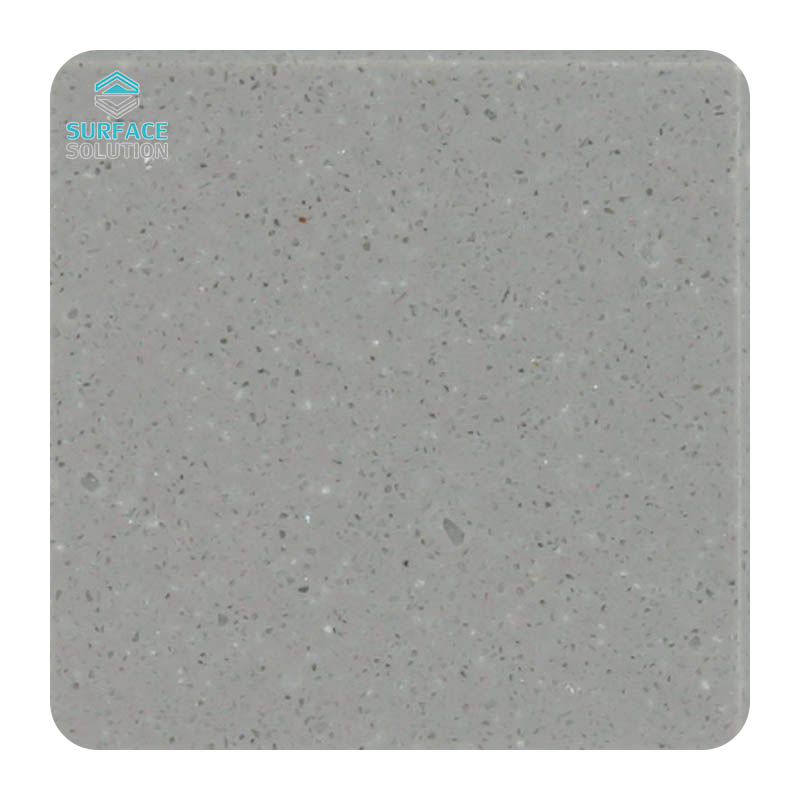
Color and texture design of solid surface counters will move beyond monotonous pure white and gray systems toward natural, warm, and delicate tactile expressions. In upcoming years, earthy neutral tones including sandy beige, warm taupe, clay brown, and soft rock gray will become mainstream color choices, echoing the popular biophilic design trend that connects indoor spaces with nature. Meanwhile, high-gloss surfaces are gradually being replaced by low-sheen matte and soft-touch finishes. The velvety delicate texture not only avoids light pollution and reflection glare but also better hides daily minor scratches, balancing advanced visual texture and practical performance. Manufacturers are also enriching simulated natural textures, including subtle stone veins and fine gradient textures, enabling solid surfaces to replicate the natural beauty of marble and rock while retaining better stain resistance and processability than natural stone.

With the rapid development of modern prefabricated architecture and modular interior design, solid surface counters are evolving toward standardized modular customization and whole-house seamless integration. Future applications will break the single countertop limitation and realize integrated extension of countertops, backsplashes, wall panels, and special-shaped furniture components. Digital design and precise CNC manufacturing technology enable real-time visualization and customized production, greatly improving installation accuracy and efficiency. Whether for residential whole-house customization or commercial space batch engineering, modular solid surface solutions can achieve unified style, consistent color matching, and seamless overall modeling, meeting the market's demand for high-efficiency, high-precision, and high-texture interior decoration.
Related Blogs
-
 White acrylic solid surface remains a top-selling option for distributors, wholesalers and project contractors, widely specified for kitchen countertops, bathroom vanities, hotel vanity tops, commercial reception counters and custom tabletops. A common question from your downstream buyers is straigh
 -
 When renovating kitchens, bathrooms or commercial spaces, homeowners and designers often weigh different countertop materials. Acrylic solid surface is one of the most popular options, but a common question remains: is it durable enough for everyday use?Acrylic solid surface countertops are manufact
 -
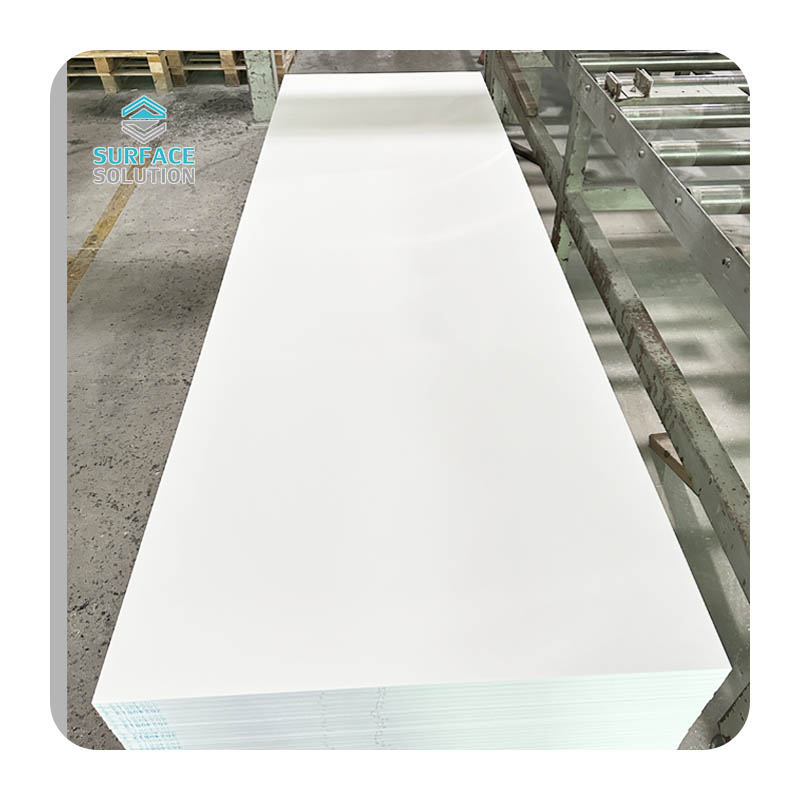 Acrylic solid surface is a premium engineered composite material widely used for kitchen countertops, vanity tops, wall panels, custom furniture and commercial interior projects. Many people confuse it with pure acrylic sheet or natural marble, but it is a carefully formulated blend of mineral powde
 -
 Kitchens and bathrooms are the most frequently used and easily worn spaces in residential and commercial buildings, where countertops face constant spills, moisture, friction, and daily stains. Compared with traditional materials such as natural marble, granite, quartz stone, and laminate, acrylic s