


How To Choose An Artificial Marble Countertop


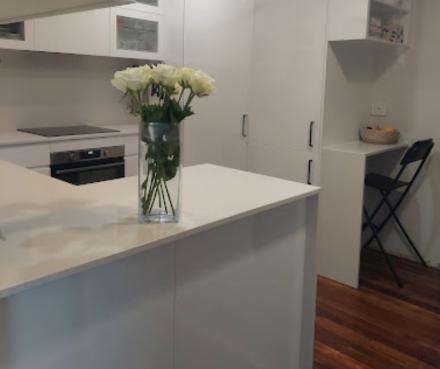
TL;DR: An artificial marble countertop provides the elegant appearance of natural stone while offering superior durability and moisture resistance. Homeowners should select engineered acrylic materials for their non-porous hygiene, seamless installation capabilities, and long-term cost savings compared to traditional quarried stone.
Home design trends constantly shift, but the demand for durable, beautiful surfaces remains consistent. Natural stone has historically dominated the premium market. However, modern manufacturing techniques have introduced engineered alternatives that solve many of the practical problems associated with raw minerals.
Many homeowners find themselves frustrated by the high maintenance requirements of natural porous stones. Spills can quickly turn into permanent stains, and regular sealing treatments add hidden ongoing costs to a renovation project. Engineered acrylic surfaces eliminate these specific pain points entirely.
Understanding the technical benefits of engineered materials allows buyers to make informed decisions for their renovation projects. By examining durability, hygiene, and design flexibility, you can determine exactly which surface material aligns with your household needs and budget constraints.

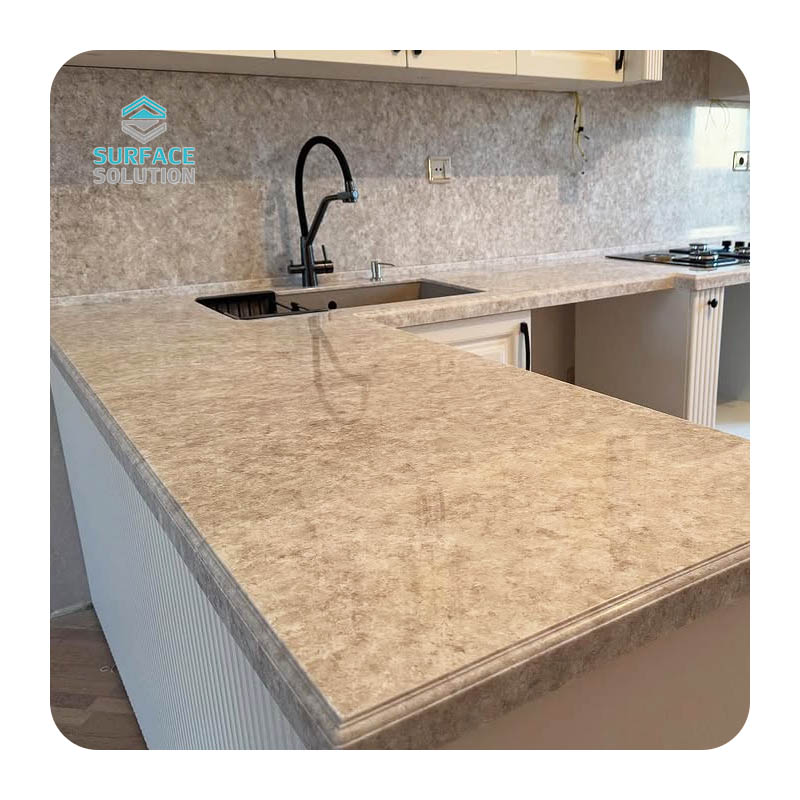
What makes engineered stone surfaces superior to natural minerals?
Natural stone requires careful maintenance to prevent bacterial growth and permanent staining. Engineered acrylic materials feature a completely non-porous structure. This manufacturing method ensures that liquids, oils, and bacteria cannot penetrate the surface layer.
Homeowners who install an artificial marble countertop gain the visual appeal of natural veining without the structural vulnerabilities of raw stone. According to industry manufacturing standards, high-quality acrylic solid surfaces can withstand daily impacts, resist heat up to 212°F (100°C), and repel common household chemicals.
Unlike quarried stone slabs that show visible seams when joined, acrylic materials can be chemically welded. Installers use color-matched adhesives to create a continuous, visually flawless surface. This seamless integration prevents dirt from accumulating in crevices, making daily cleaning significantly easier for busy families.
How do different bathroom surface materials compare?
Choosing the right material for wet environments requires careful consideration of water resistance and daily wear. The table below outlines how engineered acrylic performs against traditional materials.
Feature | Engineered Acrylic Solid Surface | Natural Stone | Ceramic / Porcelain |
Porosity | Completely non-porous | Highly porous (requires sealing) | Non-porous (but grout lines are porous) |
Seams | Invisible, seamless joints | Visible joints | Visible grout lines |
Repairability | Scratches easily buffed out | Difficult and costly to repair | Chips cannot be repaired easily |
Customization | Highly moldable (heat bendable) | Limited to flat slab cuts | Limited to factory tile shapes |
How can you integrate engineered surfaces into modern bathrooms?
Bathrooms experience extreme humidity fluctuations and constant water exposure. These conditions demand materials designed specifically for moisture-heavy environments. Engineered acrylic serves as an ideal solution for comprehensive bathroom renovations.
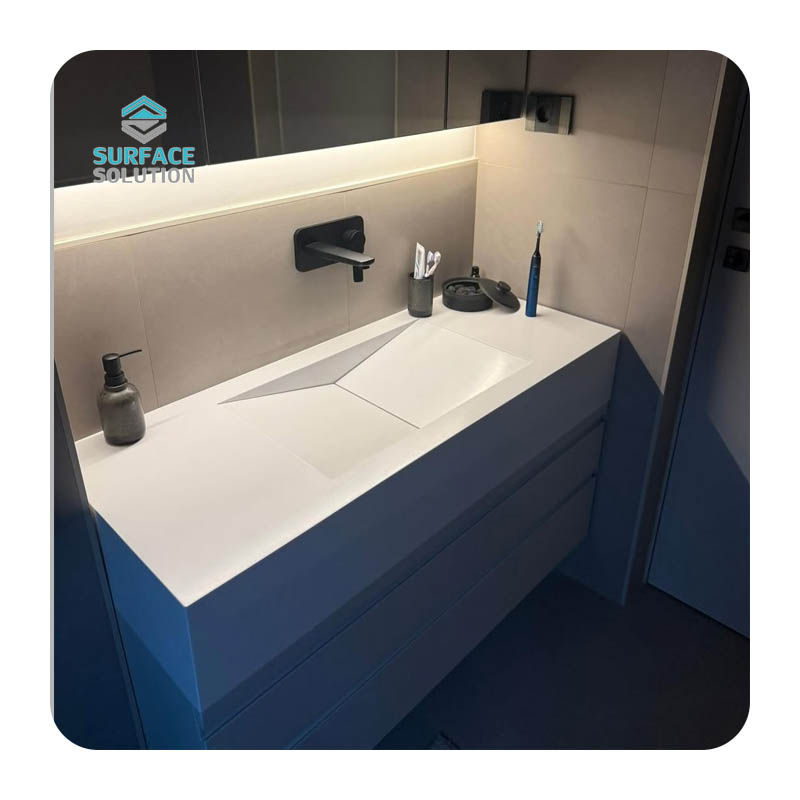
Instead of mixing different materials that might clash visually, designers often recommend using continuous acrylic components. For instance, pairing your main counters with a custom solid surface wash basin creates a sleek, unified aesthetic. Because the material is heat-bendable during the fabrication process, manufacturers can mold the sink directly into the counter space. This eliminates the traditional rim where dirt and mold typically gather.
Choose integrated acrylic fixtures if you prioritize hygiene and minimalist design. The smooth transition from the flat counter down into the basin bowl provides a contemporary look that traditional ceramic drop-in sinks cannot replicate.

What are the best practices for maintaining your new surfaces?
Engineered acrylic requires minimal effort to maintain its factory finish. Daily cleaning requires only mild soap, warm water, and a microfiber cloth. Avoid abrasive scouring pads, as these can dull the polished finish over time.
For stubborn water spots or minor surface scratches, homeowners can use a mild abrasive cleanser and a standard Scotch-Brite pad to gently buff the affected area in a circular motion. Because the color and pattern run consistently through the entire thickness of the material, light sanding will not destroy the design.
If you decide to install a marble top vanity made from engineered acrylic, you will never need to purchase specialized stone sealants. This zero-maintenance requirement saves homeowners hundreds of dollars over the lifespan of the bathroom furniture.
Upgrading your residential spaces with confidence
Investing in high-quality engineered materials fundamentally improves how you interact with your home environments. By prioritizing non-porous, seamless acrylic surfaces, you protect your household from hidden bacteria while elevating the overall interior design. Evaluate your current kitchen and bathroom surfaces, identify areas prone to moisture damage, and consider replacing them with durable, seamless acrylic solutions to ensure long-lasting structural integrity.
Frequently Asked Questions
What is the lifespan of an engineered acrylic surface?
High-quality acrylic solid surfaces typically last 15 to 20 years under normal household use. Their exceptional longevity stems from the material's repairability; minor scratches and burns can be easily sanded out by the homeowner, restoring the surface to its original condition.
Can engineered acrylic withstand hot pots and pans?
While acrylic solid surfaces resist moderate temperatures, extreme heat can cause surface damage or discoloration. Always use trivets or hot pads when placing boiling pots or heat-generating appliances directly onto the counter.
How much does engineered stone cost compared to natural stone?
Engineered acrylic generally costs 20% to 40% less than premium natural stones like quarried marble or granite. The total cost savings also include the elimination of specialized fabrication tools, expensive professional repairs, and annual chemical sealing treatments.
Are acrylic surfaces safe for food preparation?
Yes. Because acrylic solid surfaces are completely non-porous, they do not harbor bacteria, mold, or mildew. They meet strict industry standards for food preparation areas, making them a highly sanitary choice for residential kitchens and commercial restaurants.
Related Blogs
-
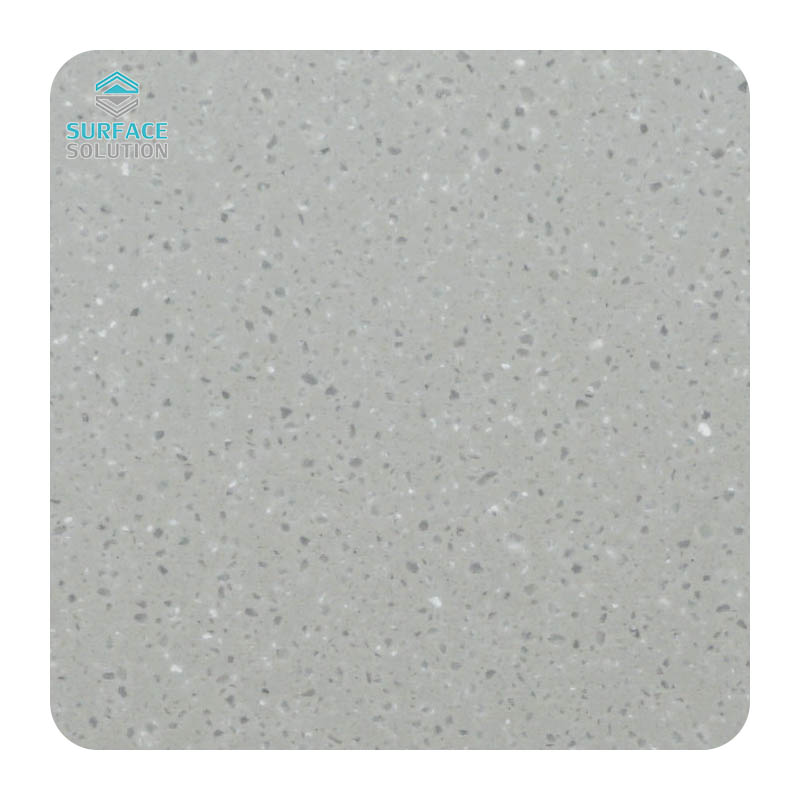 Artificial Stone Wall Art: Adding Texture and Depth to Modern InteriorsIn the pursuit of unique, expressive interior spaces, artificial stone wall art has become a powerful design element. Unlike flat paint, wallpaper, or ordinary wall panels, artificial stone wall art brings authentic texture, thre
 -
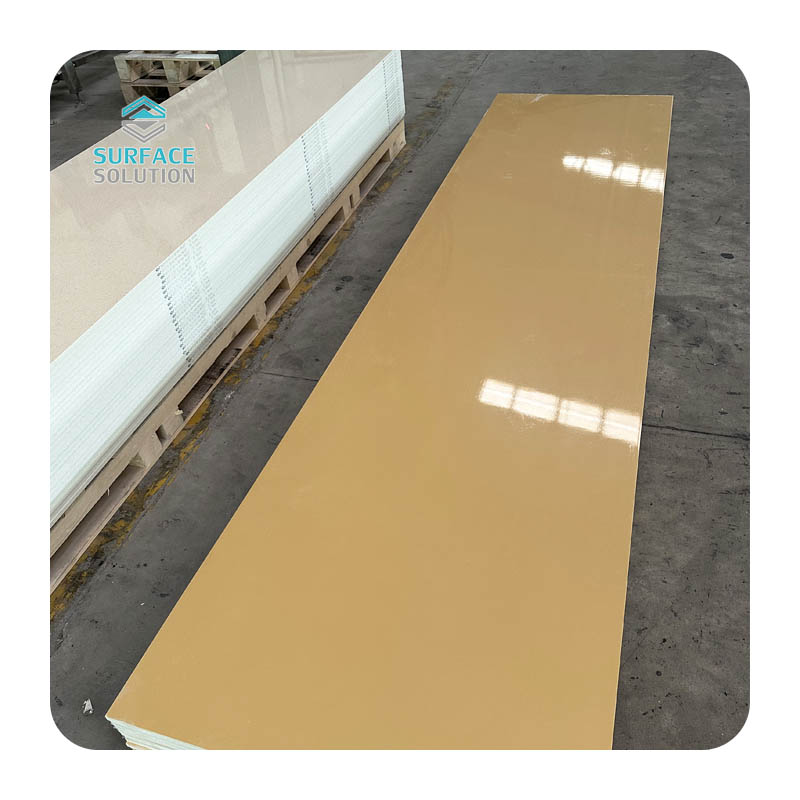 Artificial Stone for Retail Spaces: Enhancing Customer ExperienceIn the fiercely competitive retail industry, store design is no longer merely a matter of interior decoration. It has evolved into a core strategic tool to attract foot traffic, extend customer stay time, and elevate brand perception.
 -
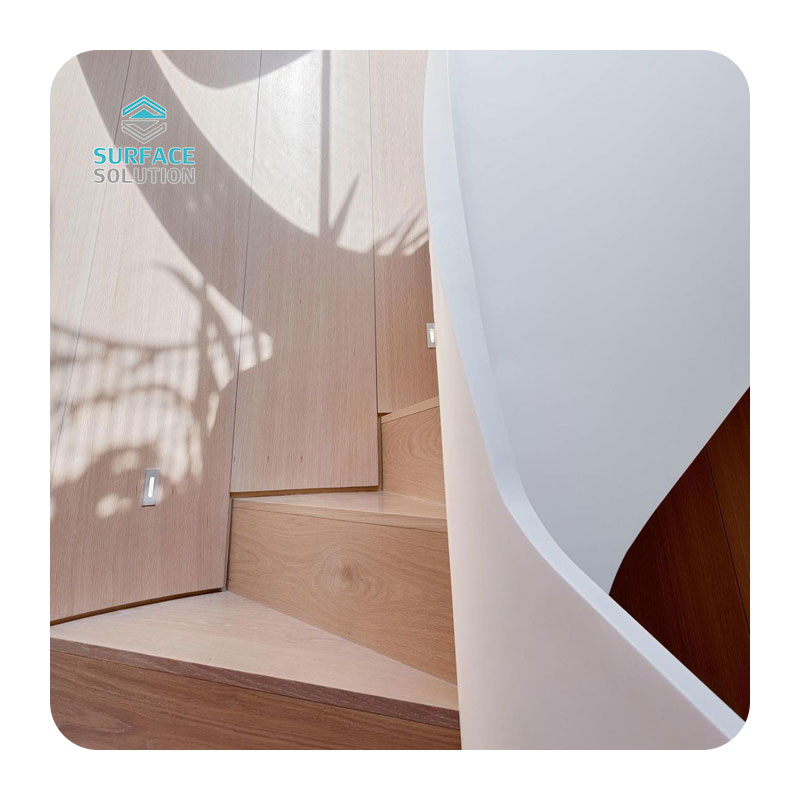 Artificial Stone Staircases: Combining Safety and StyleStaircases serve as both vital functional structures and core decorative elements in residential and commercial buildings. For decades, natural stone stair treads have been a popular choice for premium interior design, thanks to their elegant te
 -
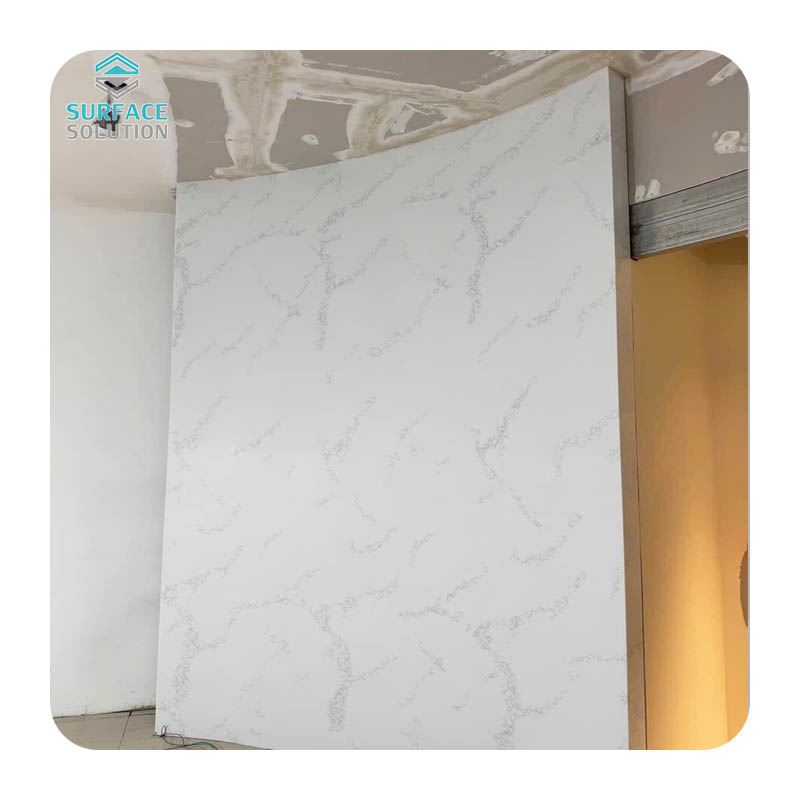 Artificial Stone Wall Panels: Transforming InteriorsNatural stone has long been revered in interior design for its timeless texture, elegant tones, and unique organic charm. Yet its inherent drawbacks—excessive weight, exorbitant costs, cumbersome installation, and high maintenance demands—have limi


