


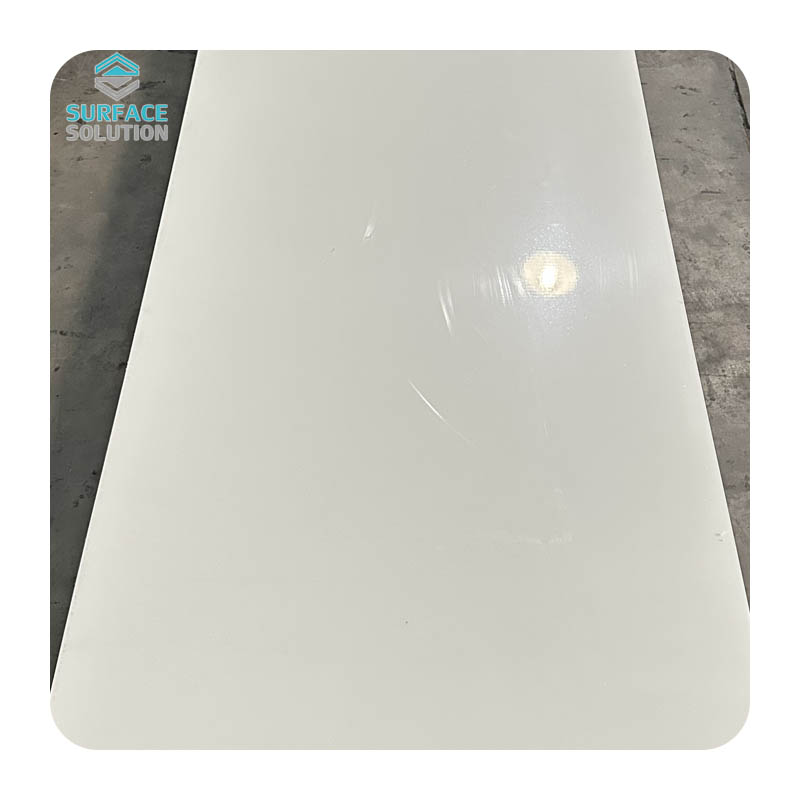
Map your space: Use a tape measure to record the length, width, and depth of your countertop area. Include overhangs (typically 1–1.5 inches for kitchen islands, 0.5 inches for standard countertops) and cutouts for sinks, stovetops, or faucets.
Draw a template: Trace the countertop shape onto poster board or cardboard. This template will act as a guide for cutting the solid surface—test it by placing it on your cabinets to confirm the fit.

Sheet size: Standard sheets are 36–60 inches wide and ½–1 inch thick. Opt for a single sheet if your countertop is under 60 inches long to avoid seams; for longer surfaces, plan for one seamless joint.
Color/pattern: Light colors show fewer scratches, while veined patterns can hide minor imperfections (great for first-time DIYers).
Cutting tools: A circular saw with a fine-tooth blade (80–100 teeth) for straight cuts; a jigsaw with a bi-metal blade for curved cutouts (sinks/stovetops).
Sanding tools: 120-grit, 220-grit, and 400-grit sandpaper (wet/dry for final smoothing); a random orbital sander (optional but saves time).
Adhesives & finishing supplies: Solid surface adhesive (match the color of your sheet); painter’s tape; clamps; a putty knife; denatured alcohol (for cleaning surfaces before gluing).
Safety gear: Safety goggles, dust mask, work gloves, and ear protection (cutting solid surface creates dust and noise).
Set up a stable workbench: Cover a large table or sawhorses with a drop cloth to protect the solid surface from scratches. Lay the sheet face-down (to avoid damaging the visible side) on the workbench.
Transfer the template: Tape your cardboard template to the back of the solid surface sheet. Use a pencil to trace the template—add a ¼-inch "buffer" around cutouts (you’ll sand it down later for a precise fit).
Cut the main shape first: Secure the sheet with clamps (place scrap wood under clamps to avoid denting the surface). Use the circular saw to cut along the traced lines—keep the saw at a slow, steady pace to prevent the sheet from chipping. Let the saw blade come to a complete stop before lifting it off the material.
Cut out openings for sinks/stovetops: Drill a ½-inch hole inside the traced cutout (large enough for the jigsaw blade). Insert the jigsaw blade and cut along the lines—again, go slow around curves to avoid cracking.

Sand the cuts: Start with 120-grit sandpaper to smooth rough edges. Move to 220-grit, then 400-grit for a polished finish. For curved edges, wrap sandpaper around a sponge to contour evenly.
Wet-sand for a seamless look: Dip 400-grit sandpaper in water and sand the edges lightly—this removes fine scratches and gives the surface a glossy, professional appearance. Wipe away dust with a damp cloth.
Clean the edges: Wipe the joining edges with denatured alcohol to remove dust or oil—this ensures the adhesive bonds properly.
Apply adhesive: Spread a thin, even layer of solid surface adhesive on one edge. Press the two sheets together, aligning them with your template.
Clamp and cure: Use clamps to hold the sheets tightly (place scrap wood between clamps and surface to avoid damage). Let the adhesive cure for 24–48 hours (follow the manufacturer’s instructions—acrylic adhesives often take longer than polyester).
Sand the seam: Once cured, sand the seam with 120-grit, then 220-grit, then 400-grit sandpaper. Wet-sand the final pass to make the seam invisible.
Prep the cabinets: Ensure your cabinets are level and sturdy (shim uneven areas with wooden shims if needed). Clean the cabinet tops to remove debris.
Test the fit: Lift the solid surface countertop (get a helper—sheets are heavy!) and place it on the cabinets. Check for gaps or misalignments—if the fit is off, sand the edges slightly to adjust.
Secure the countertop: Drill pilot holes through the bottom of the cabinet rails into the underside of the countertop (space holes 12–16 inches apart). Screw the countertop into place with 1-inch wood screws—be careful not to over-tighten (this can crack the solid surface).
Seal around cutouts: Apply a bead of silicone caulk around sink or stovetop cutouts to prevent water from seeping under the countertop.
Final polish: Use a clean, dry cloth to buff the entire surface with a small amount of solid surface polish (optional)—this enhances shine and adds a protective layer.
Avoid overheating the material: Cutting or sanding too quickly generates heat, which can melt the resin and ruin the surface. Take breaks to let the sheet cool.
Repair mistakes easily: If you scratch the surface during installation, sand it with 400-grit sandpaper (wet-sand for deeper scratches) to fix it—solid surface’s forgiving nature is a DIYer’s best friend.
Don’t rush curing: Skipping the full adhesive cure time leads to weak seams that can split later. Be patient!
Protect the surface during installation: Cover the countertop with a drop cloth when installing sinks or faucets to avoid scratches.
Using the wrong blade: A coarse-tooth saw blade will chip the solid surface—always use an 80–100 tooth blade for circular saws and a bi-metal blade for jigsaws.
Ignoring dust: Cutting solid surface creates fine resin dust—wear a dust mask and work in a well-ventilated area (or use a shop vac to suck up dust as you cut).
Forgetting overhangs: Measure overhangs twice—too little overhang looks awkward, while too much can cause the countertop to sag.
Related Blogs
-
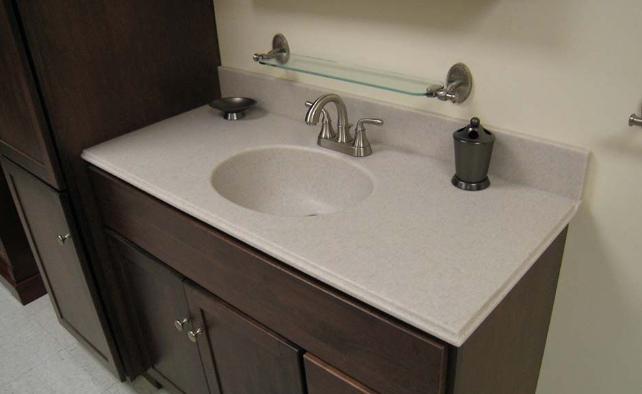 Bathroom Sink Furniture: Combining Aesthetics with FunctionalityThe bathroom, once a purely functional space, has evolved into a sanctuary of comfort and style—a place where practicality meets personal taste. Among the key elements that define this balance, bathroom sink furniture stands out as both
 -
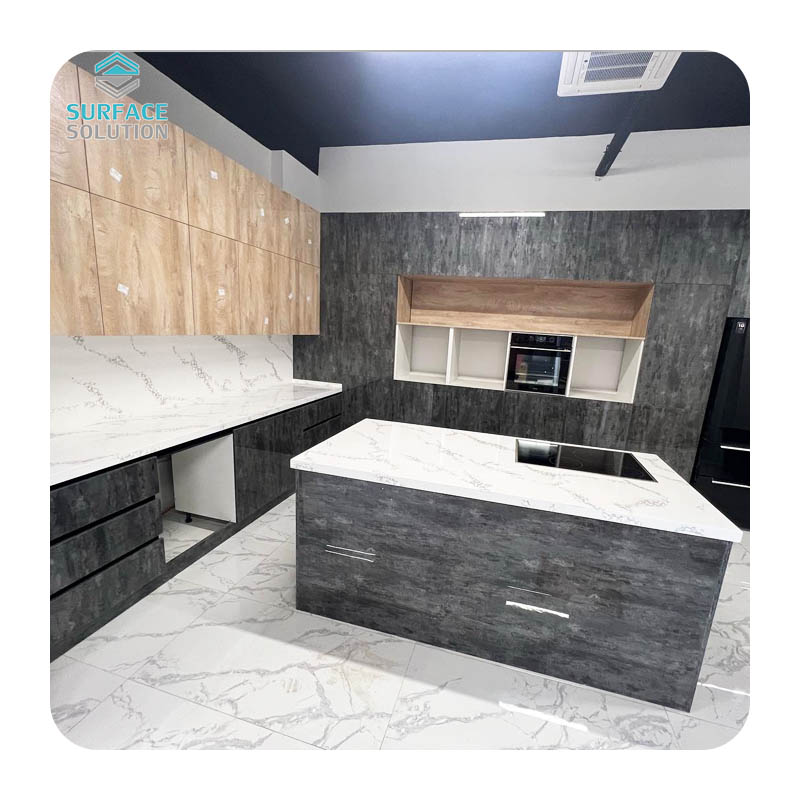 Upgrading your cooking space transforms the entire feel of your home. A crucial part of this transformation involves learning how to install kitchen countertops correctly. Proper installation ensures a beautiful finish, long-lasting durability, exceptional functionality. Whether you choose an acryli
 -
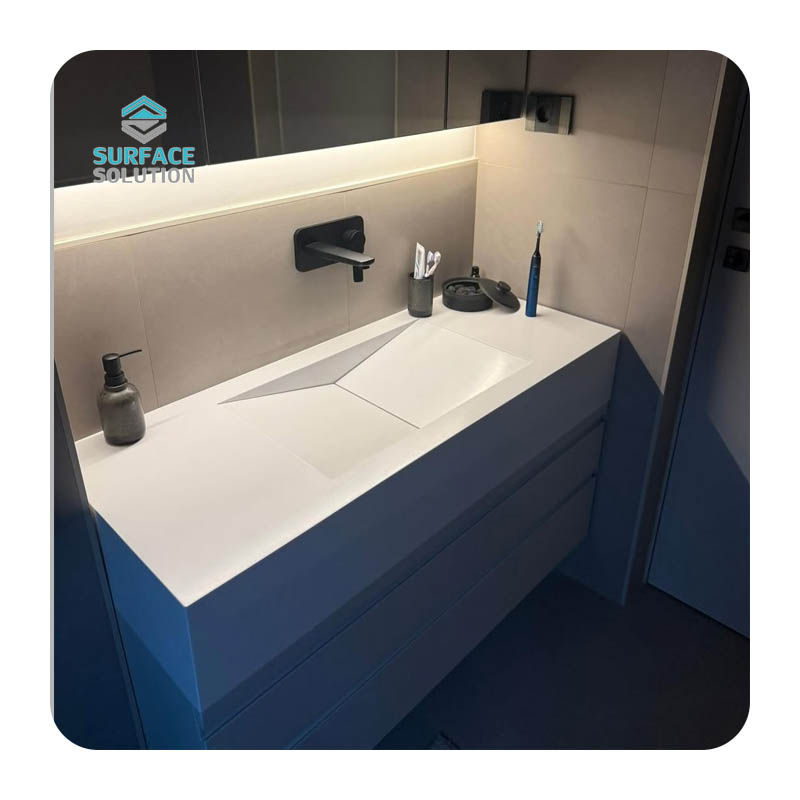 Lighting Ideas to Complement Your Bathroom Sink FurnitureThe bathroom sink area is more than just a functional space—it’s a daily retreat where you start and end your day, and the right lighting can elevate both its functionality and aesthetic appeal. When paired with acrylic artificial stone sink f
 -
 How to Pair Fixtures with Bathroom Sink Furniture: A Guide to Acrylic Artificial StoneThe bathroom is no longer just a functional space—it’s a sanctuary where aesthetics and practicality converge. When designing or renovating this intimate area, the pairing of fixtures with bathroom sink furniture p


