Customizing Your Acrylic Solid Surface Material: Tips And Ideas


Monochromatic Sophistication: For a sleek, modern look, opt for a single color across large surfaces (e.g., a all-white acrylic kitchen countertop paired with matching backsplashes). This creates a seamless, clutter-free aesthetic that elevates small spaces.
Gradient and Ombre Effects: For a dynamic twist, work with manufacturers to create gradient or ombre designs. Imagine a bathroom vanity that transitions from pale blue at the top to deep navy at the base, mimicking the flow of water—perfect for coastal or contemporary bathrooms.
Color Blocking: Mix complementary or contrasting colors to define zones. In a restaurant bar, for example, a matte black acrylic countertop could be paired with a bright coral acrylic backsplash to create visual interest without overwhelming the space.
Pro Tip: Test color samples in natural and artificial light before finalizing—acrylic’s slight translucency can make hues appear warmer or cooler depending on lighting conditions.

Matte Finish: Ideal for high-traffic areas like kitchen islands or office desks, a matte texture hides fingerprints and scratches better than polished surfaces. It also gives a soft, understated look that pairs well with minimalist decor.
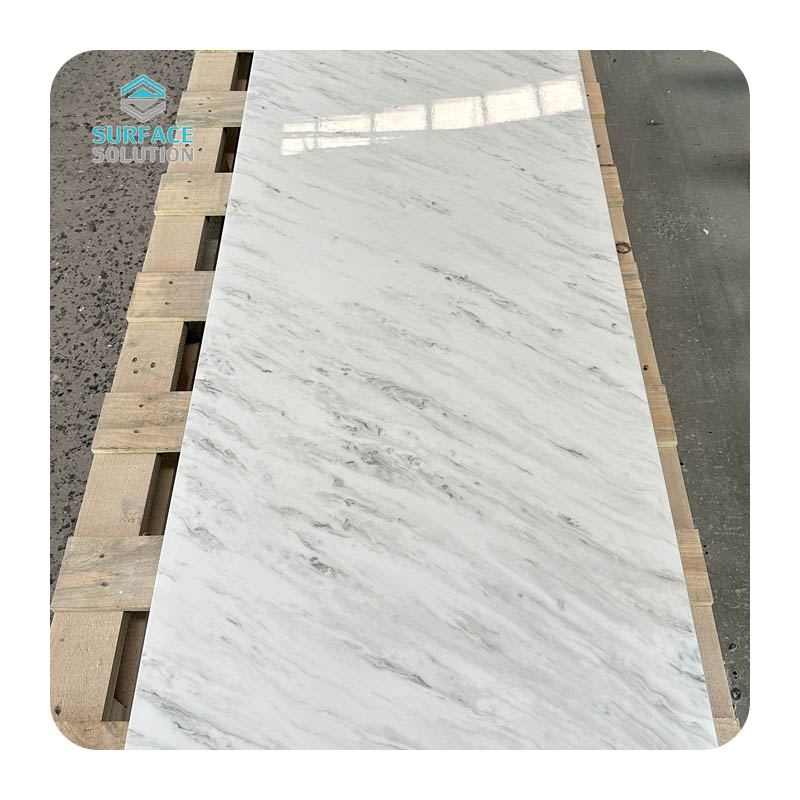
Brushed or Textured Patterns: For a more organic feel, consider brushed acrylic (which mimics the look of metal) or embossed patterns (like marble veining, wood grain, or geometric designs). These textures add depth without sacrificing the material’s seamless quality—great for statement pieces like a reception desk or a bathroom shower wall.
Custom Textures: For truly one-of-a-kind projects, work with manufacturers to create custom textures. For example, a hotel lobby could feature an acrylic wall panel with a subtle wave texture to evoke a sense of calm, or a retail display could have a dotted texture to draw attention to products.
Curved Lines for Softness: Replace sharp corners with curved edges to create a welcoming vibe. A curved acrylic vanity in a bathroom softens the space, while a rounded acrylic countertop in a home office adds a modern, approachable touch. For larger projects, like a restaurant booth or a museum exhibit, curved acrylic panels can create fluid, eye-catching forms.
Seamless Integrations: Acrylic solid surface can be joined without visible seams, making it perfect for large, continuous surfaces. Imagine a kitchen where the countertop, backsplash, and even the sink are made from a single piece of acrylic—no grout lines, no gaps, just a smooth, hygienic surface that’s easy to clean. This is also a game-changer for commercial spaces like hospitals or labs, where hygiene is critical.
Custom Cutouts and Embeddings: Add functionality with custom cutouts (e.g., a countertop with a built-in wine rack or a desk with a cable management slot) or embed objects like LED lights, glass fragments, or even small plants for a unique twist. For example, a home bar could feature an acrylic countertop with embedded LED strips that glow softly at night, creating a cozy ambiance.
Pro Tip: Work with a skilled fabricator early in the design process—they can advise on what shapes are feasible and help you avoid common pitfalls (e.g., ensuring curved edges have enough support).

Residential Hacks: For families, add a heat-resistant acrylic backsplash behind the stove to protect walls from splatters. For pet owners, a seamless acrylic floor in a mudroom can withstand scratches and be wiped clean in minutes. In a home gym, a non-slip acrylic mat (with a custom texture) provides a safe, easy-to-maintain surface for workouts.
Commercial Solutions: In retail, acrylic display cases can be customized with adjustable shelves and built-in lighting to showcase products. In hospitality, a hotel vanity with a built-in charging port (hidden within the acrylic) adds convenience for guests. For healthcare, acrylic solid surface is non-porous, making it ideal for exam room countertops that can be disinfected quickly and thoroughly.
Sustainable Additions: Pair customization with eco-friendliness by using recycled acrylic solid surface (many manufacturers now offer this option) or integrating it with sustainable features. For example, a kitchen countertop could have a built-in compost bin compartment, or a office desk could be made from recycled acrylic paired with reclaimed wood legs.
Acrylic + Wood: The warmth of wood contrasts beautifully with acrylic’s sleekness. Try a kitchen island with an acrylic countertop and wooden cabinetry, or a coffee table with an acrylic base and a reclaimed wood top.
Acrylic + Metal: For an industrial-chic vibe, pair acrylic with metal (e.g., a bathroom vanity with a matte black acrylic top and brass fixtures, or a retail display with acrylic shelves and stainless steel frames).
Acrylic + Glass: For a light, airy feel, combine acrylic with glass. A home office desk with an acrylic frame and a glass top, or a shower enclosure with acrylic walls and glass doors, creates a space that feels open and spacious.