Comparing Acrylic and Quartz Solid Surfaces: Which Is Right for You?
When it comes to choosing
solid surfaces for kitchens, bathrooms, or commercial spaces, two materials stand out for their durability, versatility, and aesthetic appeal: acrylic and quartz. Both have become go-to options for homeowners and designers alike, but they differ significantly in composition, performance, and ideal use cases. Understanding these differences is key to making an informed decision that aligns with your lifestyle, budget, and design goals. In this article, we’ll dive deep into the characteristics of acrylic and quartz solid surfaces, comparing their strengths, weaknesses, and everything in between.
1. Composition: What Are They Made Of?
The fundamental distinction between acrylic and quartz solid surfaces lies in their composition, which directly impacts their performance and properties.
Acrylic solid surfaces, often marketed under brand names like Corian, are
man-made composites primarily composed of acrylic resin (typically methyl methacrylate) and alumina trihydrate (ATH), a mineral derived from bauxite. They also contain pigments for color and small amounts of additives to enhance durability. A key feature of acrylic surfaces is that they are homogeneous—meaning the color and pattern run all the way through the material, rather than being a top layer.
Quartz solid surfaces, on the other hand, are engineered stone products made from a blend of natural quartz crystals (usually 90-95%) and a polymer resin binder (5-10%), along with pigments. Unlike acrylic, quartz is not fully homogeneous; while the pigments are mixed throughout the resin, the quartz crystals create a natural, stone-like appearance. It’s important to note that quartz solid surfaces are not the same as natural quartzite—they are a man-made material that leverages the hardness of natural quartz.
2. Durability: Resistance to Scratches, Stains, and Heat
Durability is a top priority for solid surfaces, especially in high-traffic areas like kitchens. Here’s how acrylic and quartz stack up against common wear and tear.
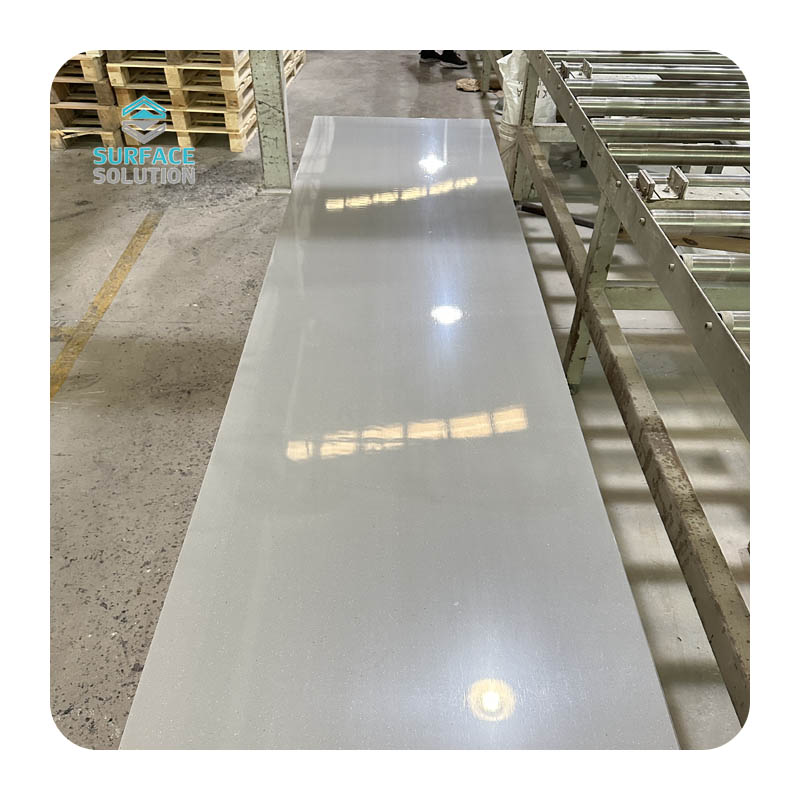
Scratch Resistance
Quartz takes the lead in scratch resistance due to its high quartz content—quartz is one of the hardest natural minerals (rated 7 on the Mohs scale, compared to granite at 6-7 and marble at 3-4). This makes quartz highly resistant to everyday scratches from knives, pots, and other kitchen tools. While it’s not entirely scratch-proof (extremely sharp objects or heavy abrasion can still leave marks), it requires far less maintenance to keep its smooth surface.
Acrylic, by contrast, is softer (rated 3-4 on the Mohs scale). It is more prone to scratches from daily use, including light cuts from knives or scuffs from cookware. However, acrylic has a major advantage here: scratches are repairable. Using fine-grit sandpaper or a polishing compound, most surface scratches can be buffed out, restoring the surface to its original condition. This repairability is a significant draw for homeowners who want a long-lasting surface that can be refreshed over time.
Stain Resistance
Both acrylic and quartz offer excellent stain resistance, but their mechanisms differ. Acrylic’s non-porous nature (thanks to its resin binding) means liquids cannot seep into the material, preventing stains from setting in. Even tough stains like coffee, wine, or oil can be easily wiped away with a mild cleaner, no sealing required.
Quartz is also non-porous due to the resin that binds the quartz crystals together. This makes it equally resistant to stains, and it also does not require periodic sealing (unlike natural stone like granite). The only caveat with quartz is that prolonged exposure to highly pigmented or acidic substances (like turmeric or lemon juice) can sometimes cause discoloration if not cleaned up promptly—though this is rare with most modern quartz products.
Heat Resistance
Heat resistance is an area where the two materials differ sharply. Quartz has good heat resistance and can withstand moderate heat (e.g., placing a warm pot on the surface briefly). However, it is not heat-proof: sudden exposure to extreme heat (like a hot pan straight from the stove) can cause the resin binder to expand and contract, leading to cracks or discoloration. Most manufacturers recommend using trivets or hot pads with quartz.
Acrylic is significantly less heat-resistant. It has a lower melting point than quartz, so even brief contact with hot objects (like a curling iron in the bathroom or a hot pot in the kitchen) can cause melting, warping, or discoloration. These heat damages are often irreversible, making acrylic a less ideal choice for areas where high heat is common unless strict use of trivets is enforced.
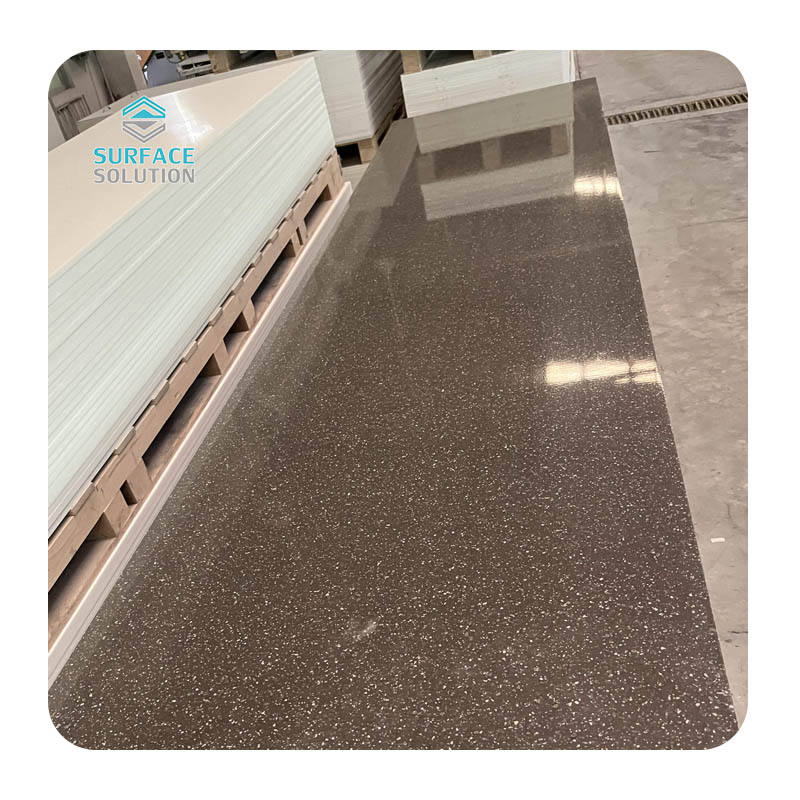
3. Aesthetics: Design Flexibility and Appearance
Both acrylic and quartz offer a wide range of design options, but they cater to different aesthetic preferences.
Acrylic solid surfaces are celebrated for their design versatility. Since they are man-made and homogeneous, they can be produced in an almost infinite range of solid colors, pastels, and even subtle patterns. They can also be seamlessly joined—seams between panels are nearly invisible when properly installed. This makes acrylic ideal for custom designs, such as integrated sinks, curved edges, or large, continuous surfaces (like countertops or wall panels) where a smooth, uniform look is desired. The finish of acrylic is typically matte or semi-gloss, giving it a soft, contemporary appearance.
Quartz, by contrast, is prized for its natural stone-like appearance. The quartz crystals embedded in the resin create patterns that mimic natural stone, such as granite, marble, or travertine. While it comes in a wide range of colors (from neutral grays and whites to bold blues and greens), the patterns are more organic and varied than acrylic’s uniform look. Quartz is available in a variety of finishes, including polished (which highlights the stone’s sparkle), matte, and honed. It’s an excellent choice for homeowners who want the beauty of natural stone without the high maintenance requirements.
4. Maintenance: Effort Required to Keep Them Looking New
Maintenance needs are a crucial factor for many homeowners, and here again, acrylic and quartz have distinct requirements.
Quartz is known for its low maintenance. Its non-porous surface means no sealing is needed (unlike natural stone), and daily cleaning only requires a mild detergent and water. For tougher stains, a non-abrasive cleaner (like baking soda mixed with water) works well. As mentioned earlier, scratches are rare, but if they do occur, they are more difficult to repair—professional refinishing may be necessary in some cases.
Acrylic requires a bit more proactive maintenance to prevent damage. While it’s easy to clean (mild detergent and water suffice), it is more prone to scratches, so regular buffing with a polishing compound may be needed to keep the surface smooth. Heat damage is a major concern, so using trivets is a must. On the flip side, as noted earlier, any scratches or minor nicks can be repaired at home with basic tools, eliminating the need for professional help in most cases.
5. Cost: Which Is More Budget-Friendly?
Cost is often a deciding factor, and the price of acrylic and quartz solid surfaces overlaps in some ranges but has key differences.
Acrylic solid surfaces typically range from $40 to $80 per square foot (including installation). Mid-range options are around $50-$60 per square foot, making it a relatively affordable choice compared to high-end natural stone. However, custom designs (like integrated sinks or curved edges) can increase the cost due to the additional labor required.
Quartz is generally more expensive, with prices ranging from $50 to $120 per square foot (including installation). High-end quartz products (with premium patterns or finishes) can cost even more. The higher price is due to the cost of natural quartz crystals and the more complex manufacturing process. While quartz has a higher upfront cost, its low maintenance and durability may make it a better long-term investment for some homeowners.
6. Ideal Use Cases: Where to Choose Each Material
Based on their properties, acrylic and quartz are better suited for different spaces and lifestyles:
Acrylic is ideal for:
Bathrooms: Its non-porous nature resists moisture, and it can be seamlessly integrated with sinks or shower walls. The repairability is a plus for high-traffic bathrooms.
Custom designs: Integrated sinks, curved countertops, or continuous wall panels benefit from acrylic’s seamless joining and design flexibility.
Homeowners who prioritize repairability: Those who want a surface that can be fixed easily rather than replaced if damaged.
Quartz is ideal for:
Kitchens: Its scratch and heat resistance (compared to acrylic) make it perfect for busy kitchens where knives and hot pots are common.
Homeowners who want natural stone aesthetics without maintenance: Quartz mimics granite or marble but requires no sealing or special cleaning.
Commercial spaces: Restaurants, offices, or retail spaces benefit from quartz’s durability and low maintenance, as it can withstand heavy use.
7. Environmental Impact: A Quick Comparison
For eco-conscious homeowners, the environmental impact of each material is worth considering. Acrylic is made from petroleum-based resin, which is a non-renewable resource. However, many acrylic manufacturers offer recycling programs for scrap material, and some products are made with recycled acrylic. Acrylic is also long-lasting, which reduces the need for replacement (lowering its overall environmental footprint).
Quartz uses natural quartz crystals, which are abundant but require mining (which has environmental impacts like habitat disruption). The resin binder is also petroleum-based. Like acrylic, quartz is long-lasting, and some manufacturers use recycled content in their products. Neither material is perfectly eco-friendly, but both can be sustainable choices if sourced from manufacturers with strong environmental practices.
Final Verdict: Acrylic vs. Quartz
Choosing between acrylic and quartz solid surfaces ultimately comes down to your priorities:
Choose acrylic if you value design flexibility, seamless integration, repairability, and a more budget-friendly option. It’s perfect for bathrooms, custom projects, or homeowners who don’t mind using trivets and occasional maintenance to keep the surface looking new.
Choose quartz if you prioritize durability (scratch and heat resistance), natural stone aesthetics, and low maintenance. It’s the best choice for kitchens, high-traffic areas, or homeowners who want a surface that requires minimal upkeep and can withstand daily wear and tear.
Both materials offer excellent performance and can enhance the beauty of any space. By weighing your needs—from design preferences to lifestyle habits—you can select the solid surface that will serve you well for years to come.


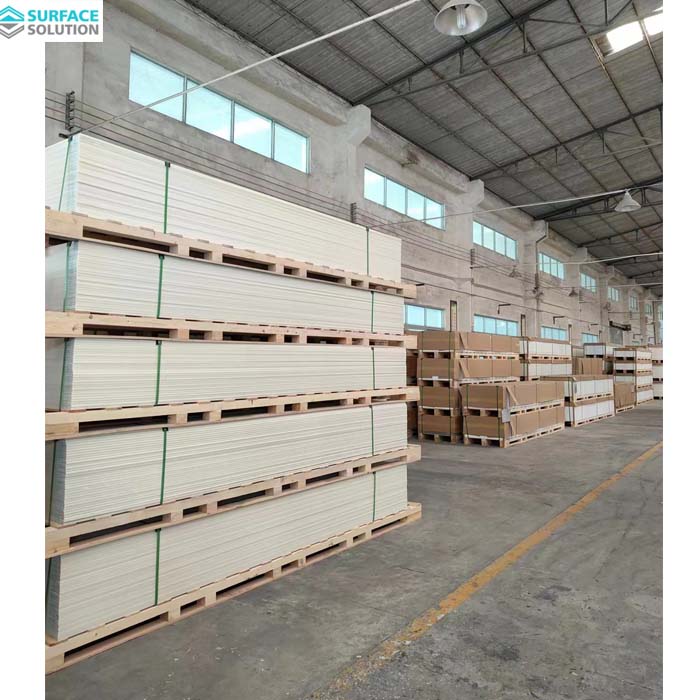 White acrylic solid surface remains a top-selling option for distributors, wholesalers and project contractors, widely specified for kitchen countertops, bathroom vanities, hotel vanity tops, commercial reception counters and custom tabletops. A common question from your downstream buyers is straigh
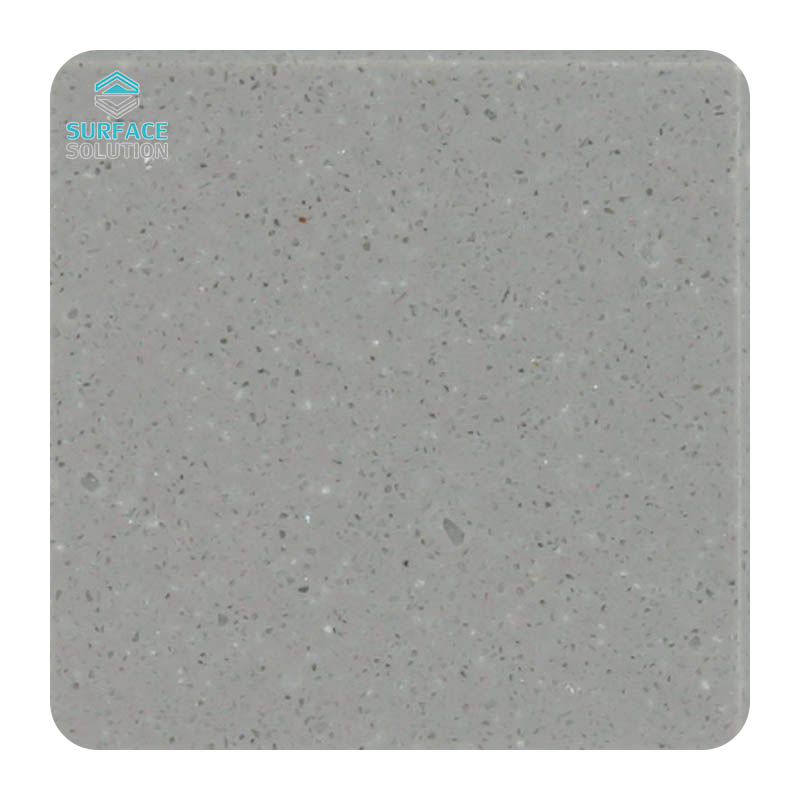 When renovating kitchens, bathrooms or commercial spaces, homeowners and designers often weigh different countertop materials. Acrylic solid surface is one of the most popular options, but a common question remains: is it durable enough for everyday use?Acrylic solid surface countertops are manufact
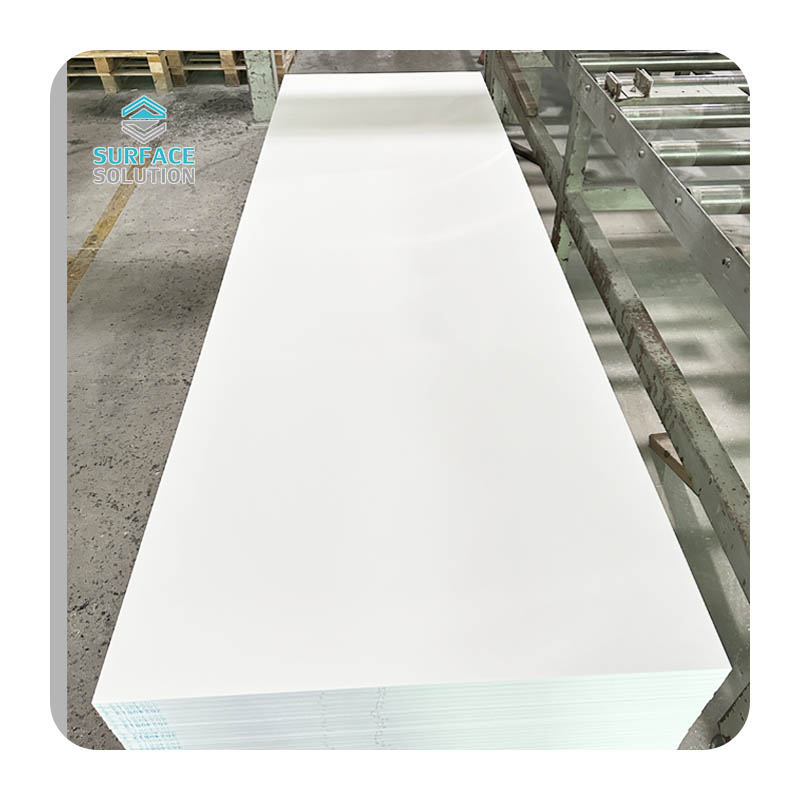 Acrylic solid surface is a premium engineered composite material widely used for kitchen countertops, vanity tops, wall panels, custom furniture and commercial interior projects. Many people confuse it with pure acrylic sheet or natural marble, but it is a carefully formulated blend of mineral powde
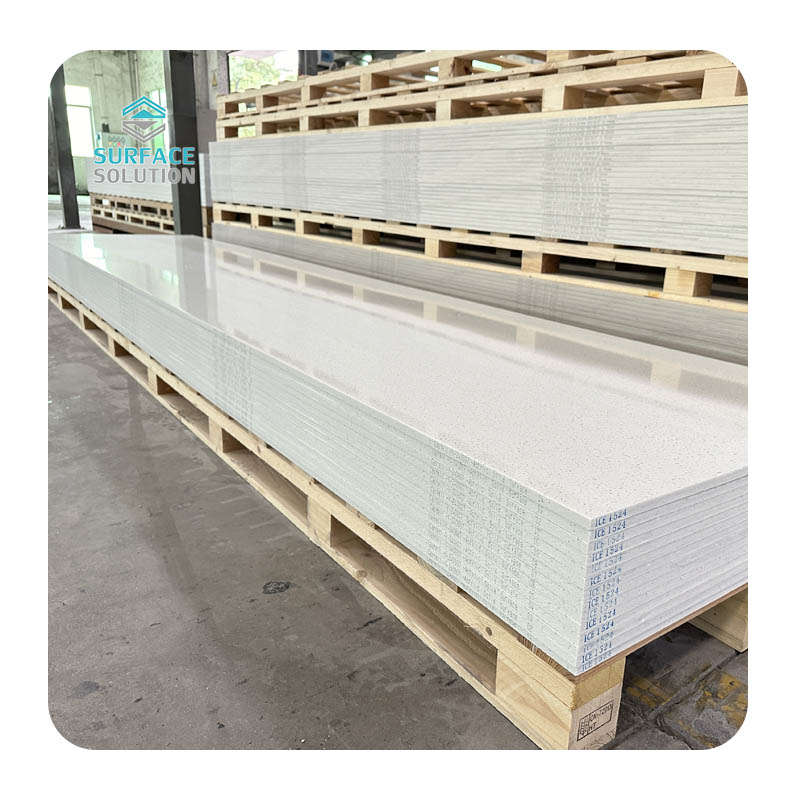 Kitchens and bathrooms are the most frequently used and easily worn spaces in residential and commercial buildings, where countertops face constant spills, moisture, friction, and daily stains. Compared with traditional materials such as natural marble, granite, quartz stone, and laminate, acrylic s


